Italian
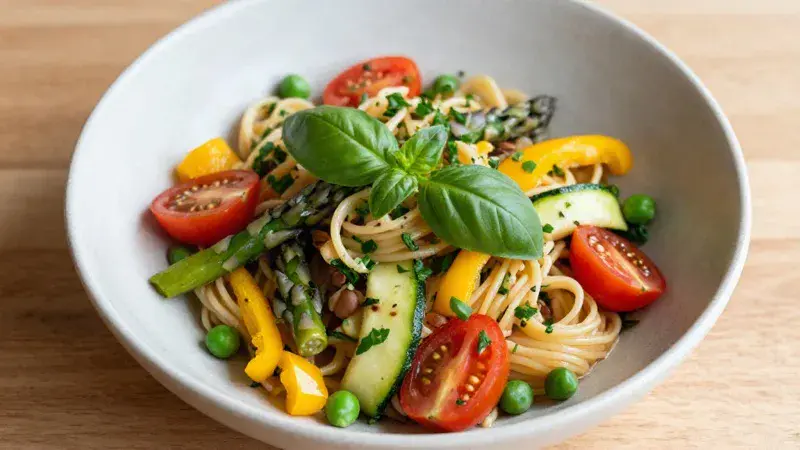
Red Lentil Pasta Primavera
Protein-and-fibre-rich red lentil pasta tossed with spring vegetables in a light lemon-garlic sauce.
~30 mintotal
Ingredients
- 250g red lentil pasta
- 1 courgette, diced
- 1 cup peas
- 1 cup asparagus, chopped
- 2 garlic cloves, minced
- 2 tbsp olive oil
- Zest & juice of 1 lemon
- Salt & pepper
- Parmesan to serve
Cooking Steps
Cook the lentil pasta per the packet, then drain, saving a little water.
Sauté the garlic, courgette, asparagus and peas in olive oil until tender.
Toss in the pasta with lemon zest, juice and a splash of pasta water.
Season and finish with parmesan.
Optional Enhancements
- Chickpea or edamame pasta
- Add grilled chicken or prawns
- Stir in rocket
Plant & Growing Tips
Courgette
- Sow seeds directly after the last frost in full sun and rich, well-drained soil.
- Provide ample space, about 90cm between plants, as they grow into large bushes or vines.
- Ensure consistent watering, especially once fruits start to form, to prevent cracking.
Peas
- Plant seeds in early spring as soon as the soil can be worked, or in autumn in mild climates, in full sun.
- Provide a trellis or netting for climbing varieties to support their growth.
- Keep soil consistently moist but not waterlogged, especially during flowering and pod development.
Asparagus
- Grow from one-year-old crowns planted in early spring in a permanent bed with full sun and excellent drainage.
- Prepare the bed deeply with plenty of compost, as asparagus can produce for 15-20 years.
- Refrain from harvesting any spears for the first two years to allow the plants to establish strong root systems.
Garlic
- Plant individual cloves, pointed end up, 5-7cm deep and 10-15cm apart in well-drained soil in autumn for a summer harvest.
- Ensure it receives full sun and consistent moisture, especially during bulb formation.
- Fertilize with a balanced organic fertilizer in early spring as growth resumes.
Natural Pest Control
- Hand-pick squash bugs and their eggs from courgette leaves early in the morning.
- Use row covers to protect young pea and courgette plants from early season pests like aphids and cucumber beetles.
- Introduce beneficial insects like ladybugs to control aphid populations on peas and courgettes.
- Set beer traps or use copper tape barriers to deter slugs and snails from young asparagus and pea shoots.
Harvest
Courgette
- Pick courgettes when they are young and tender, typically 10-15cm long, for best flavour and texture.
- Harvest frequently to encourage more production; leaving large courgettes on the vine will slow new fruit development.
- Cut the stem cleanly with a knife rather than pulling, to avoid damaging the plant.
Peas
- Harvest shelling peas when pods are plump and bright green, but before they become tough or yellow.
- Pick snap peas and snow peas when pods are still tender and sweet, often before the peas inside are fully developed.
- Harvest regularly to encourage the plant to produce more pods over a longer season.
Asparagus
- In the third year after planting, begin harvesting spears when they are 15-20cm tall and about the thickness of a pencil.
- Snap off spears at ground level rather than cutting, to avoid damaging the crown.
- Stop harvesting when spear thickness significantly decreases, typically by early summer, to allow the plant to store energy for next year.
Garlic
- Harvest when the bottom third to half of the leaves have turned yellow and started to dry, but while several green leaves remain.
- Loosen the soil around the bulbs with a fork before gently pulling them out to avoid bruising.
- Cure garlic in a warm, dry, well-ventilated area for 2-4 weeks before storing to improve its shelf life.
Storing & Freezing
Fridge up to 3 days.