Italian
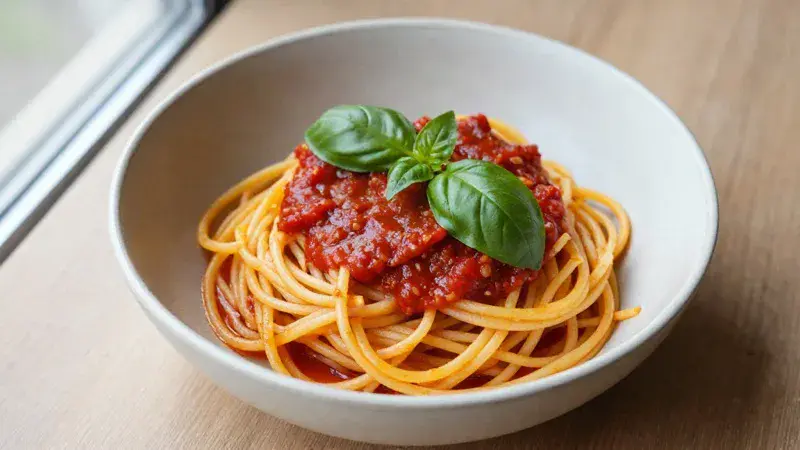
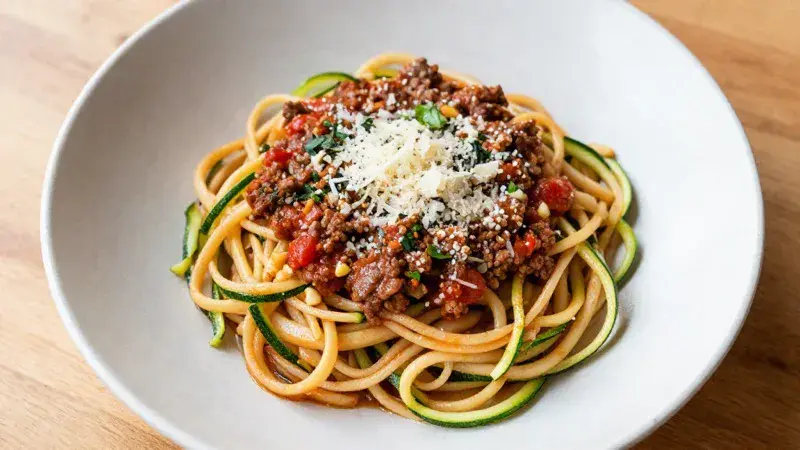
Courgette Noodle Bolognese
A rich, slow-simmered bolognese over spiralised courgette 'zoodles'. All the comfort, a fraction of the refined carbs.
Estimated. Worked out from the ingredients using the UK food composition tables, so treat it as a guide rather than a measurement. A typical recipe lands within about a quarter of the true figure. Makes about 4.
Ingredients
- 4 courgettes, spiralised
- 500g lean beef or turkey mince
- 1 onion, chopped
- 2 garlic cloves, minced
- 2 carrots, grated
- 400g chopped tomatoes
- 2 tbsp tomato paste
- 1 tsp oregano
- 1 tbsp olive oil
- Salt & pepper
- Parmesan to serve
Cooking Steps
Brown the mince in olive oil, then add onion, garlic and carrot and soften.
Stir in the tomatoes, tomato paste and oregano; simmer 20–25 minutes.
Sauté the courgette noodles 2–3 minutes until just tender (don't overcook).
Season the sauce and serve over the zoodles.
Finish with a little parmesan.
Optional Enhancements
- Add lentils to the sauce for fibre
- Spaghetti squash instead of courgette
- Add mushrooms
Plant & Growing Tips
Courgettes
- Plant courgette seeds or seedlings in a sunny spot after the last frost, ensuring plenty of space as they are vigorous growers.
- Provide consistent watering, especially once fruits start to form, aiming for deep watering at the base of the plant.
- Consider providing a sturdy trellis or cage to support the heavy vines and keep fruits off the ground.
Tomatoes
- Sow tomato seeds indoors 6-8 weeks before the last frost, then transplant to a sunny spot with rich, well-draining soil.
- Stake or cage indeterminate varieties early to support their growth and prevent sprawling.
- Water deeply and consistently at the base of the plant to prevent blossom end rot and cracking.
Carrots
- Sow carrot seeds directly into finely tilled, stone-free soil after the last frost for straight roots.
- Ensure consistent moisture, especially during germination, and thin seedlings to 2-4 inches apart for proper root development.
- Avoid adding fresh manure to the soil before planting, as this can cause carrots to fork.
Garlic
- Plant individual cloves point-up in well-draining soil in autumn (for larger bulbs) or early spring (for smaller, quicker harvest).
- Choose a sunny location and ensure good soil drainage to prevent rot.
- Keep the soil consistently moist during active growth but reduce watering as harvest approaches.
Oregano
- Plant oregano in a sunny location with well-draining soil; it thrives on neglect once established.
- Water sparingly once established, as it is drought-tolerant.
- Grow in pots to contain its spread if you don't want it taking over garden beds.
Natural Pest Control
- Inspect courgette and tomato plants regularly for aphids and spray them off with a strong stream of water.
- Use row covers over young carrot beds to protect against carrot rust flies and other root maggots.
- Encourage beneficial insects like ladybugs and lacewings to control aphid populations on herbs and vegetables.
- Hand-pick slugs and snails from courgette and tomato plants, especially after rain.
Harvest
Courgettes
- Harvest courgettes when they are young and tender, typically 6-8 inches long, for best flavour and to encourage more fruit production.
- Check plants daily once they start producing, as courgettes can grow very quickly and become seedy if left too long.
Tomatoes
- Pick tomatoes when they are fully coloured and firm but yield slightly to gentle pressure.
- Harvest in the morning after dew has dried for best flavour and storage.
- If frost threatens, pick any mature green tomatoes to ripen indoors.
Carrots
- Harvest carrots when their shoulders emerge from the soil and reach your desired size, typically 1/2 to 1 inch in diameter.
- Loosen the soil around the carrots before pulling to avoid breaking the delicate roots.
- Harvest before the weather gets too hot, as this can make carrots woody and bitter.
Garlic
- Harvest garlic when the lower third to half of the leaves have turned yellow and started to die back, typically in mid-summer.
- Carefully loosen the soil with a fork and gently lift the bulbs, avoiding damage.
- Do not wait until all leaves are brown, as this can cause the bulb wrappers to split.
Oregano
- Snip off stems and leaves as needed, harvesting before the plant flowers for the most intense flavour.
- Cut back about one-third of the plant to encourage new, bushy growth.
- Frequent harvesting prevents the plant from becoming woody and leggy.
Storing & Freezing
Sauce keeps 3 days in the fridge and freezes 3 months; cook zoodles fresh.