Global
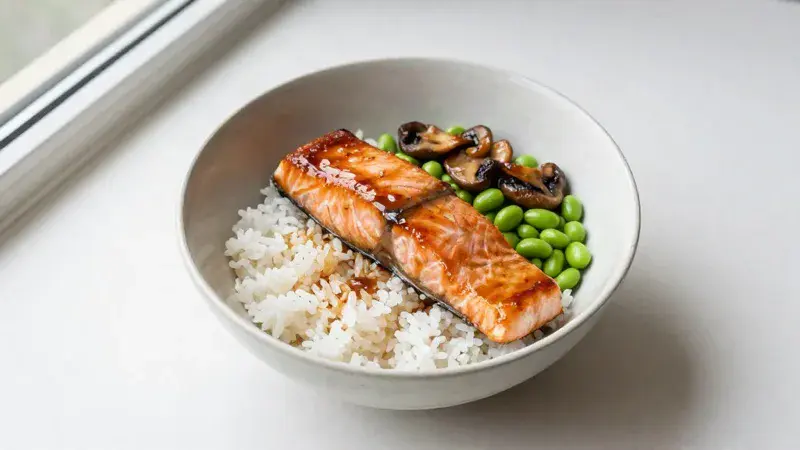
Umami Miso Glazed Salmon Bowl
A vibrant and filling bowl brimming with miso-glazed salmon, tender edamame, and roasted mushrooms, all harmoniously cooked in the air fryer for a quick weeknight delight.
Estimated. Worked out from the ingredients using the UK food composition tables, so treat it as a guide rather than a measurement. A typical recipe lands within about a quarter of the true figure. Makes about 4.
Ingredients
- 4 salmon fillets (150g each)
- 2 tbsp miso paste
- 1 tbsp honey
- 1 cup shelled edamame (fresh or frozen)
- 200g mushrooms, sliced
- 400g baby potatoes, halved
- 1 tbsp olive oil
- 1 clove garlic, minced
- Salt and pepper to taste
- Lemon wedges for serving
Cooking Steps
Preheat the air fryer to 200°C (400°F).
In a bowl, mix miso paste, honey, salt, and pepper. Brush each salmon fillet with the miso glaze and set aside.
Place the halved baby potatoes in the air fryer basket, drizzle with olive oil, and season with salt and pepper. Cook for 12 minutes, shaking the basket halfway through.
After the potatoes have cooked for 12 minutes, add the sliced mushrooms to the basket with them. Shake gently and continue cooking for another 8 minutes.
At the 4-minute mark, add the edamame to the basket (with the potatoes and mushrooms), ensuring even cooking. Cook until all components are perfectly tender and golden.
Once everything is cooked, remove the basket and add the salmon fillets to the air fryer (you may need to do this in batches if your fryer is small). Cook for 8 minutes, or until the salmon is thoroughly cooked and flakes easily.
Let the salmon rest for 2 minutes. Serve by placing a layer of baby potatoes, mushrooms, and edamame in a bowl, topping with the miso-glazed salmon, and adding a squeeze of fresh lemon juice.
Optional Enhancements
- Tofu for salmon (use firm tofu)
- Quinoa for baby potatoes (sprinkle cooked quinoa on the bowl)
- Snap peas instead of edamame
Plant & Growing Tips
Edamame
- Sow edamame seeds directly into the garden after the last spring frost, when soil temperatures are consistently warm.
- Plant in full sun in well-drained soil; edamame is a legume and can fix its own nitrogen.
- Ensure consistent moisture, especially during flowering and pod development.
Potatoes
- Plant certified seed potatoes in early spring, a few weeks after the last frost, in loose, fertile soil.
- As the plants grow, 'hill' them by mounding soil around the stems to encourage more tuber development and protect from sunlight.
- Ensure consistent watering, especially during tuber formation, to prevent growth cracks and scab.
Garlic
- Plant individual cloves, pointed end up, 2 inches deep and 4-6 inches apart in autumn for a harvest next summer.
- Choose a sunny location with rich, well-drained soil and keep the area weed-free.
- Water regularly, especially during dry spells, until the bulbs begin to swell.
Natural Pest Control
- Hand-pick Colorado potato beetles and their larvae from potato plants and drop them into soapy water.
- Spray aphids off edamame plants with a strong stream of water or use insecticidal soap for persistent infestations.
- Rotate crops annually to disrupt the life cycle of soil-borne pests and diseases affecting potatoes and garlic.
Harvest
Edamame
- Harvest edamame pods when they are plump, bright green, and immature, before they begin to yellow.
- Pick individual pods or cut entire stems when most pods are ready.
Potatoes
- For 'new' potatoes, gently dig around plants after flowering and take a few small tubers, leaving the main plant to continue growing.
- For main crop potatoes, harvest when the foliage has completely died back; dig carefully to avoid damaging tubers.
Garlic
- Harvest garlic when the lower leaves have yellowed and started to die back, but 4-5 green leaves remain.
- Gently loosen the soil and pull up the bulbs, then cure them in a dry, shady, well-ventilated spot for a few weeks.
Storing & Freezing
Store leftovers in an airtight container in the refrigerator for up to 2 days. Reheat in the air fryer for 5 minutes at 180°C (356°F).