Global
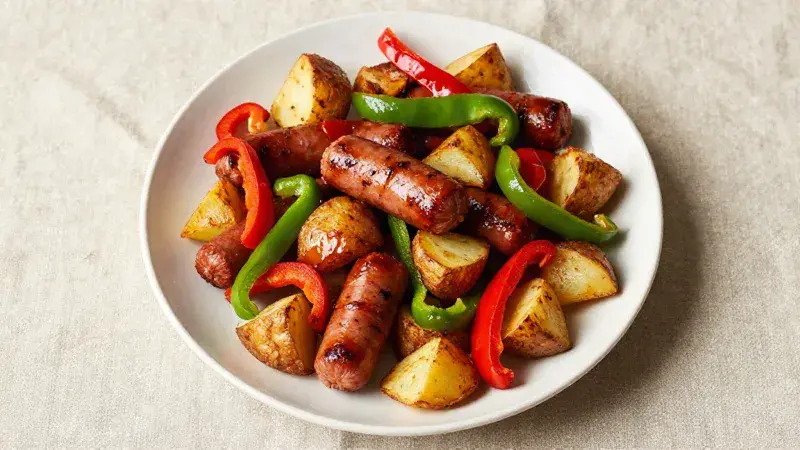
Cajun Sausage and Vegetable Medley
A vibrant, flavorful dinner featuring spicy Cajun sausage paired with roasted peppers and crispy baby potatoes, all cooked to perfection in the air fryer.
Estimated. Worked out from the ingredients using the UK food composition tables, so treat it as a guide rather than a measurement. A typical recipe lands within about a quarter of the true figure. Makes about 2.
Ingredients
- 250g Cajun sausage, sliced
- 300g baby potatoes, halved
- 1 red bell pepper, sliced
- 1 green bell pepper, sliced
- 1 medium onion, sliced
- 2 tablespoons olive oil
- 1 teaspoon garlic powder
- 1 teaspoon paprika
- Salt and pepper to taste
- Fresh parsley for garnish
Cooking Steps
Preheat air fryer to 200°C (400°F).
In a mixing bowl, toss the halved baby potatoes with 1 tablespoon of olive oil, garlic powder, paprika, salt, and pepper.
Place the seasoned potatoes in the air fryer basket and cook for 15 minutes, shaking halfway through.
While the potatoes are cooking, toss the sliced Cajun sausage, bell peppers, and onion with the remaining olive oil, salt, and pepper in a separate bowl.
After 15 minutes, add the sausage and vegetable mixture to the air fryer basket with the potatoes; shake to combine.
Cook everything together for an additional 10 minutes, shaking the basket at the 5-minute mark for even cooking.
Once cooking time is completed, let the dish rest for 5 minutes; this allows the flavors to meld together.
Plate the potatoes, sausage, and vegetables, garnishing with fresh parsley before serving.
Optional Enhancements
- Andouille sausage for Cajun sausage
- Zucchini instead of bell peppers
- Olive oil can be substituted with avocado oil
Plant & Growing Tips
Potatoes
- Plant seed potatoes in trenches about 15cm deep after the last frost, ensuring they get full sun.
- As potato plants grow, 'earth up' soil around the stems to encourage more tuber development and protect them from light.
- Maintain consistent moisture, especially when tubers are forming, to prevent scab.
Bell Peppers
- Start bell pepper seeds indoors 8-10 weeks before the last expected frost, transplanting outside when temperatures are consistently warm.
- Provide full sun and well-drained soil, and consider using stakes or cages to support the fruit-laden branches.
- Bell peppers thrive in containers, provided they have enough space and regular watering.
Onion
- Plant onion sets in early spring in a sunny spot with well-drained soil, spacing them about 10-15cm apart.
- Ensure consistent watering during dry spells to promote good bulb development.
- Onions prefer a pH between 6.0 and 7.0; amend soil with compost if needed.
Parsley
- Sow parsley seeds in a spot with partial shade or morning sun, keeping the soil consistently moist for germination.
- Parsley can be grown in pots on a windowsill or patio, making it convenient for fresh use.
- Provide rich, well-draining soil and feed with a balanced liquid fertilizer every few weeks.
Natural Pest Control
- Hand-pick slugs and snails from potato foliage in the evenings or early mornings, especially after rain.
- Spray aphids off bell pepper plants with a strong jet of water or apply neem oil according to product instructions.
- Cover onion beds with fine mesh insect netting or row covers from planting until mid-summer to deter onion fly.
- Plant marigolds or nasturtiums nearby to act as trap crops or to attract beneficial insects like ladybugs that prey on aphids.
Harvest
Potatoes
- Harvest 'new' potatoes when plants begin to flower, gently digging a few tubers from under the plant.
- For storage, wait until the foliage has completely yellowed and died back, then dig up all tubers carefully.
- Cure harvested potatoes in a cool, dark, well-ventilated area for 1-2 weeks before storing.
Bell Peppers
- Pick bell peppers when they reach their mature size and desired color (green, red, yellow), feeling firm to the touch.
- Use a sharp knife or shears to cut the stem, leaving a small piece attached to the pepper.
- Harvesting regularly encourages the plant to produce more fruit; leaving overripe peppers can slow production.
Onion
- Harvest onions when their tops begin to yellow and fall over naturally.
- Loosen the soil around the bulbs and allow them to 'cure' in a warm, dry, well-ventilated spot for a few weeks.
- Do not harvest too early, as this can affect storage quality; wait for the tops to fully collapse.
Parsley
- Snip outer stems close to the base of the plant as needed, using a cut-and-come-again method.
- Harvest before the plant flowers ('bolts'), as the leaves can become bitter once flowering begins.
- Regular harvesting encourages bushier growth and prolongs the plant's productivity.
Storing & Freezing
Store in an airtight container in the fridge for up to 3 days; reheat in the air fryer or microwave.