Global
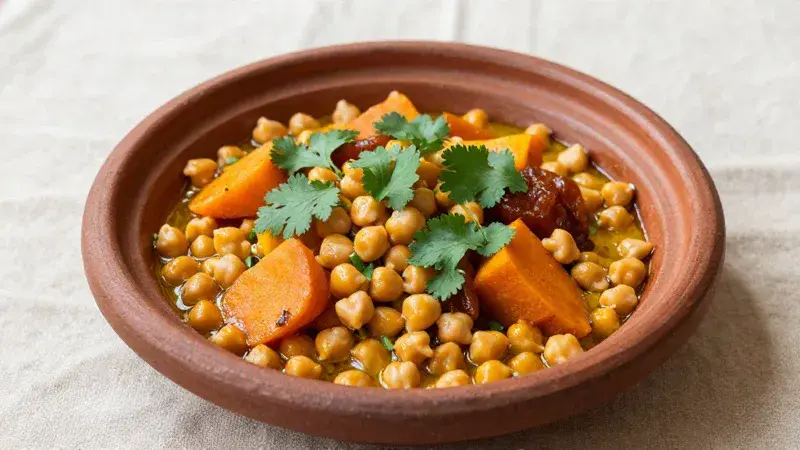
Moroccan Chickpea & Sweet Potato Tagine
A fragrant plant-based batch stew of chickpeas, sweet potato and apricots in warming spices. Five portions, better every day.
Estimated. Worked out from the ingredients using the UK food composition tables, so treat it as a guide rather than a measurement. A typical recipe lands within about a quarter of the true figure. Makes about 6.
Ingredients
- 1 tbsp olive oil
- 2 onions, chopped
- 3 garlic cloves
- 1 tbsp ras el hanout
- 1 tsp cumin
- 2 sweet potatoes, chunked
- 800g chickpeas, drained
- 400g chopped tomatoes
- 1½ cups stock
- 6 dried apricots, chopped
- Salt & pepper
Cooking Steps
Soften the onion and garlic in oil; add the spices for 1 minute.
Add sweet potato, chickpeas, tomatoes, stock and apricots.
Simmer 25–30 minutes until the sweet potato is tender.
Season, portion into 5 containers, cool fast.
Refrigerate within 2 hours.
Optional Enhancements
- Butternut instead of sweet potato
- Add spinach at the end
- Serve with couscous or quinoa (cooled fast, stored separate)
Plant & Growing Tips
Onions
- Plant onion sets or seedlings in early spring in a sunny location with well-drained, fertile soil.
- Ensure consistent moisture, especially during bulb formation, but avoid overwatering.
- Space plants about 10-15 cm (4-6 inches) apart to allow for good bulb development.
Garlic
- Plant individual cloves, pointed end up, in well-drained soil in autumn, about 6-8 weeks before the ground freezes.
- Provide a sunny spot and enrich the soil with compost before planting.
- Ensure consistent moisture, but avoid waterlogging which can lead to rot.
Sweet Potatoes
- Plant 'slips' (sprouted shoots) in warm soil, typically after all danger of frost has passed and soil temperatures are above 18°C (65°F).
- Sweet potatoes need full sun and plenty of space to spread, as their vines can grow quite long.
- Grow in raised beds or containers in cooler climates to help warm the soil and improve drainage.
Tomatoes
- Sow seeds indoors 6-8 weeks before the last frost, transplanting seedlings outdoors into full sun once temperatures are consistently warm.
- Provide sturdy support like stakes or cages early on to keep heavy fruit off the ground and improve air circulation.
- Water deeply and consistently at the base of the plant to prevent cracking and blossom end rot.
Natural Pest Control
- Use floating row covers to protect young onion plants from onion maggot flies.
- Practice crop rotation for garlic to prevent soil-borne diseases like white rot.
- Regularly inspect sweet potato plants for flea beetles and hand-pick any visible pests or larvae.
- Hand-pick tomato hornworms from plants; they are large and blend in, but their droppings are a good indicator.
Harvest
Onions
- Harvest when the tops begin to yellow and fall over naturally, typically in mid to late summer.
- Loosen the soil around the bulbs and allow them to cure in a warm, dry, well-ventilated area for several weeks before storing.
- Pulling onions too early can result in smaller bulbs, while leaving them too long might lead to splitting or rot.
Garlic
- Harvest when the lower third to half of the leaves have turned yellow or brown, but before all the leaves have died back.
- Gently loosen the soil and lift the bulbs, being careful not to bruise them.
- Cure garlic in a warm, dry, well-ventilated area for 2-4 weeks before trimming roots and tops for storage.
Sweet Potatoes
- Harvest before the first hard frost, typically when the leaves and vines begin to yellow.
- Carefully dig up the tubers with a garden fork, starting about 30 cm (12 inches) away from the plant to avoid damage.
- Cure the harvested sweet potatoes in a warm, humid environment for 1-2 weeks to sweeten them and improve storage life.
Tomatoes
- Pick tomatoes when they are fully colored, firm, and easily detach from the vine.
- Harvest regularly to encourage continuous production throughout the growing season.
- If frost is imminent, pick all mature green tomatoes; they can ripen indoors on a windowsill.
Storing & Freezing
Fridge 4 days; freezes 3 months. Legume stews hold texture and flavour better than almost anything, so they're ideal day-4 food.