Global
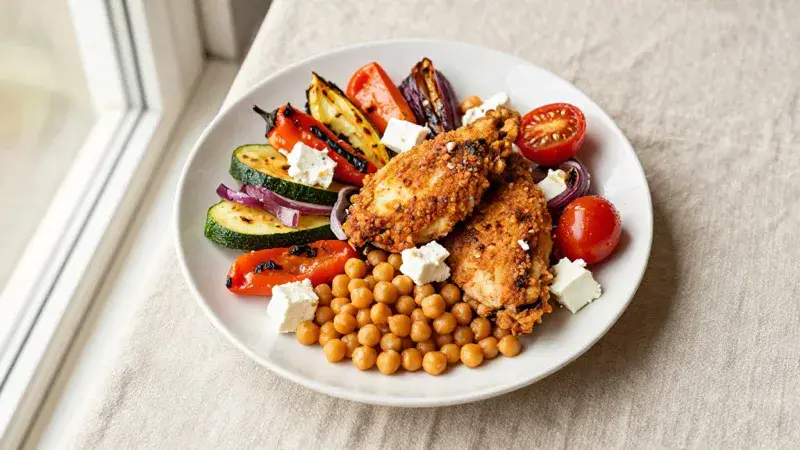
Mediterranean Bliss: Air-Fryer Greek Chicken Delight
Savor the flavors of Greece with succulent Greek-spiced chicken, hearty chickpeas, tangy feta, and vibrant roasted Mediterranean vegetables, all perfectly cooked in your air fryer.
Estimated. Worked out from the ingredients using the UK food composition tables, so treat it as a guide rather than a measurement. A typical recipe lands within about a quarter of the true figure. Makes about 4.
Ingredients
- 500g boneless, skinless chicken thighs
- 1 can (400g) chickpeas, drained and rinsed
- 1 red bell pepper, diced
- 1 zucchini, sliced
- 200g baby potatoes, halved
- 100g feta cheese, crumbled
- 3 tablespoons olive oil
- 2 teaspoons dried oregano
- 1 teaspoon garlic powder
- Salt and pepper to taste
- Juice of 1 lemon
- Fresh parsley for garnish
Cooking Steps
Preheat the air fryer to 200°C (400°F).
In a mixing bowl, combine the chicken thighs with 1 tablespoon olive oil, oregano, garlic powder, salt, and pepper. Coat evenly and set aside.
Place the baby potatoes in the air fryer basket and cook for 10 minutes.
After 10 minutes, add the seasoned chicken thighs on top of the potatoes, and sprinkle the diced red bell pepper and sliced zucchini around them. Cook for an additional 12 minutes.
After 12 minutes, add the drained chickpeas to the basket. Shake gently to combine everything and cook for another 6 minutes.
In the last 5 minutes of cooking, sprinkle the crumbled feta over the chicken and vegetables to let it soften slightly.
Once cooking is complete, allow the chicken to rest for 5 minutes. Meanwhile, squeeze fresh lemon juice over the dish and garnish with chopped parsley.
To plate, serve the chicken on a bed of the roasted vegetables and chickpeas, then add the baby potatoes on the side with a sprinkle of extra feta. Enjoy your delightful Mediterranean feast.
Optional Enhancements
- Chicken thighs can be swapped for chicken breasts or tofu for a vegetarian option.
- Chickpeas can be replaced with any other canned beans like black beans or lentils.
- Feta cheese can be substituted with goat cheese or a dairy-free cheese alternative.
Plant & Growing Tips
Red Bell Pepper
- Sow seeds indoors 8-10 weeks before the last expected frost, transplanting outdoors once all danger of frost has passed and soil is warm.
- Provide full sun, at least 6-8 hours daily, and consistent moisture for best fruit development.
- Support plants with stakes or cages as they grow to prevent branches from breaking under the weight of the fruit.
Zucchini
- Direct sow seeds outdoors after the last frost when soil temperatures are consistently above 18°C (65°F).
- Give plants ample space, at least 60-90 cm (2-3 feet) apart, as they can grow quite large.
- Water deeply and consistently, especially during flowering and fruiting, to prevent blossom end rot.
Potatoes
- Plant 'seed' potatoes in well-drained, loose soil in full sun after the last frost.
- As the plants grow, 'hill' up soil around the stems to cover new growth, which encourages more tuber formation and protects them from sunlight.
- Ensure consistent watering, especially when tubers are forming, but avoid waterlogging which can lead to rot.
Parsley
- Sow seeds directly into rich, moist soil in a spot with partial shade, or start indoors for earlier harvests.
- Parsley can be slow to germinate, so soak seeds overnight before planting to speed up the process.
- Grow in containers on a windowsill or patio for easy access, ensuring the soil remains consistently damp.
Natural Pest Control
- Hand-pick Colorado potato beetles and their larvae from potato plants, dropping them into soapy water.
- Use row covers over young zucchini plants to protect them from squash vine borers and squash bugs in early summer.
- Spray a strong jet of water to dislodge aphids from parsley and pepper plants.
- Introduce beneficial insects like ladybugs to control aphid populations on various plants.
Harvest
Red Bell Pepper
- Harvest when peppers have reached their full size and desired color (green, then red) and feel firm to the touch.
- Use a sharp knife or pruners to cut the stem, leaving a small piece attached to the pepper to improve storage life.
- Picking regularly encourages the plant to produce more fruit throughout the season.
Zucchini
- Harvest when fruits are young and tender, typically 15-20 cm (6-8 inches) long, for best flavor and texture.
- Check plants daily once they start producing, as zucchini can grow very quickly and become tough if left too long.
- Cut the stem with a sharp knife, leaving about an inch attached to the fruit.
Potatoes
- For 'new potatoes', harvest about 2-3 weeks after flowering, gently digging around the plant to remove a few tubers while leaving the main plant to grow.
- For storage potatoes, wait until the plant tops have completely died back and yellowed, usually 2-3 weeks after that, to ensure skins are 'set'.
- Carefully dig up tubers with a fork, avoiding piercing them, and allow them to cure in a cool, dark, humid spot for 1-2 weeks before storing.
Parsley
- Snip outer stems and leaves as needed, allowing the inner leaves to continue growing for a 'cut-and-come-again' harvest.
- Harvest before the plant flowers, as flowering can make the leaves bitter.
- Regular harvesting encourages bushier growth and prolongs the plant's productivity.
Storing & Freezing
Store leftovers in an airtight container in the fridge for up to 3 days. To reheat, warm in the air fryer for 5-7 minutes at 180°C (356°F).