Global
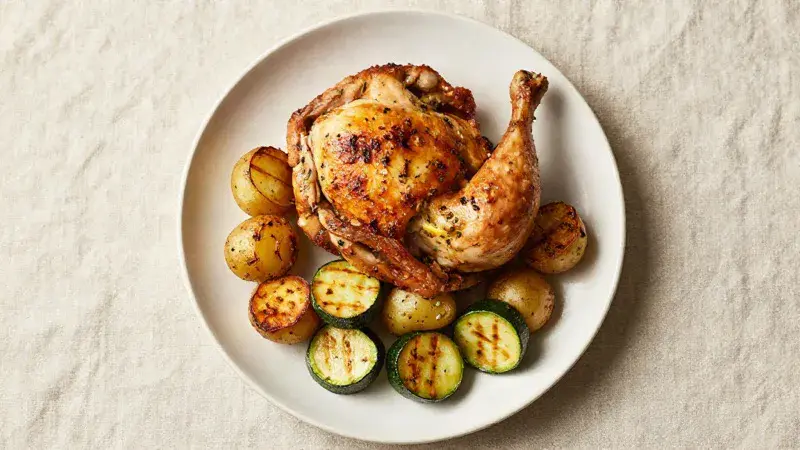
Lemon-Herb Air-Fryer Chicken with Roasted Baby Potatoes and Courgette
Juicy lemon-herb chicken fillets paired with crispy baby potatoes and tender courgette, all cooked to perfection in the air fryer for a delightful weeknight dinner.
Estimated. Worked out from the ingredients using the UK food composition tables, so treat it as a guide rather than a measurement. A typical recipe lands within about a quarter of the true figure. Makes about 4.
Ingredients
- 4 boneless, skinless chicken thighs
- 2 tablespoons olive oil
- 2 tablespoons lemon juice
- 1 teaspoon dried oregano
- 1 teaspoon garlic powder
- Salt and pepper to taste
- 500g baby potatoes, halved
- 1 medium courgette, sliced
- Fresh parsley, chopped (for garnish)
- Lemon wedges (for serving)
Cooking Steps
Preheat the air fryer to 200°C (400°F).
In a bowl, mix olive oil, lemon juice, oregano, garlic powder, salt, and pepper. Toss the chicken thighs in the mixture until fully coated.
Add the halved baby potatoes to the air fryer basket and cook for 10 minutes, shaking halfway through.
After 10 minutes, add the marinated chicken thighs on top of the potatoes and cook for an additional 12 minutes, flipping the chicken halfway through.
In the last 5 minutes of cooking, add the sliced courgette to the basket with the chicken and potatoes, mixing gently to ensure even cooking.
Once cooking is complete, let the chicken rest for 5 minutes before slicing.
To serve, plate the chicken alongside the potatoes and courgette, garnishing with freshly chopped parsley and lemon wedges.
Optional Enhancements
- Chicken thighs can be replaced with chicken breasts or tofu for a vegetarian option.
- Baby potatoes can be swapped with sweet potatoes or parsnips.
- Courgette can be replaced with bell peppers or asparagus.
Plant & Growing Tips
Potatoes
- Plant seed potatoes in well-drained soil after the last frost; mound soil around stems as they grow to protect tubers from light.
- Grow in large containers or grow bags for easy harvesting in smaller spaces.
- Ensure consistent watering, especially during tuber formation, to prevent growth defects.
Courgette
- Sow seeds directly outdoors after the last frost in full sun and rich, well-drained soil, spacing plants at least 90cm apart.
- Provide consistent moisture, especially once fruits start to form, but avoid overhead watering to prevent mildew.
- Support sprawling vines with a trellis or cage to save space and keep fruit off the ground.
Parsley
- Sow seeds in spring or autumn in a partially shaded spot with moist, well-drained soil; germination can be slow, so soak seeds overnight before planting.
- Grow in pots on a windowsill for easy access to fresh leaves year-round.
- Keep the soil consistently moist to encourage lush growth and prevent bolting.
Lemon
- Grow dwarf lemon trees in large pots in a sunny, sheltered spot, bringing them indoors before the first frost in colder climates.
- Ensure well-draining soil and consistent watering, allowing the top inch to dry out between waterings.
- Fertilize regularly with a citrus-specific fertilizer during the growing season.
Natural Pest Control
- Hand-pick slugs and snails from potato and courgette plants, especially in the evening.
- Use row covers for young courgette and potato plants to deter squash bugs and potato beetles.
- Encourage beneficial insects like ladybirds and lacewings to control aphids on parsley and lemon trees.
- Ensure good air circulation around courgette plants and avoid overhead watering to prevent powdery mildew.
Harvest
Potatoes
- Harvest new potatoes when plants begin to flower, typically 7-8 weeks after planting, by gently digging around the base.
- For mature potatoes, wait until the foliage yellows and dies back, then cure them in a dark, cool place for storage.
Courgette
- Pick courgettes when they are young and tender, typically 10-20 cm long, for best flavour and to encourage more production.
- If left on the vine, they will grow large and seedy, which can reduce subsequent yields.
Parsley
- Snip outer stems at the base as needed, leaving the inner ones to continue growing, for a cut-and-come-again harvest.
- Harvest before flowering for the best flavour, as leaves can become bitter once flowers appear.
Lemon
- Pick lemons when they are fully yellow and firm, feeling heavy for their size, by twisting them gently from the branch.
- Lemons do not ripen further once picked, so wait until they reach their desired colour and size.
Storing & Freezing
Store leftovers in an airtight container in the fridge for up to 3 days, or freeze for up to a month; reheat in the air fryer for best results.