Global
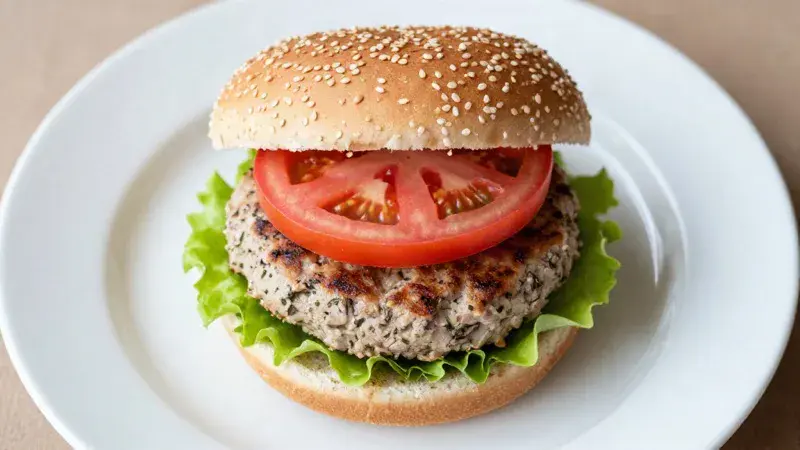
Herbed Turkey Burgers
Juicy, lean turkey burgers seasoned with fresh herbs: the classic burger, lighter and higher in protein.
~20 mintotal~249 kcalper serving~37g protein~0g carbs~11g fat
Estimated. Worked out from the ingredients using the UK food composition tables, so treat it as a guide rather than a measurement. A typical recipe lands within about a quarter of the true figure. Makes about 4.
Ingredients
- 500g turkey mince
- 1 garlic clove, minced
- 2 tbsp parsley, chopped
- 1 tsp mustard
- 1 egg
- Salt & pepper
- 1 tsp olive oil
- To serve: wholegrain buns or lettuce wraps, tomato, red onion
Cooking Steps
Mix the turkey, garlic, parsley, mustard, egg and seasoning.
Shape into 4 patties.
Cook in a little olive oil (or grill) 5–6 minutes each side until cooked through.
Serve in wholegrain buns or lettuce wraps with salad.
Optional Enhancements
- Chicken mince works too
- Add grated courgette for moisture
- Serve with avocado
Plant & Growing Tips
Tomatoes
- Sow seeds indoors 6-8 weeks before the last expected frost, transplanting outdoors once all danger of frost has passed.
- Provide full sun (at least 6-8 hours daily) and consistently moist, well-drained soil.
- Stake or cage indeterminate varieties to support heavy fruit production and keep plants upright.
Red Onion
- Plant onion sets or seeds in early spring, as soon as the soil can be worked, in a sunny location.
- Ensure good drainage and space plants 4-6 inches apart in rows to allow bulbs to develop fully.
- Keep the soil consistently moist, especially during bulb formation, but reduce watering as harvest approaches.
Parsley
- Sow seeds directly outdoors in spring after the last frost, or start indoors for an earlier harvest.
- Prefers partial shade in hot climates and consistently moist, rich soil.
- Parsley can be grown well in containers, making it easy to bring indoors in colder weather.
Lettuce
- Plant seeds directly in early spring or late summer, as lettuce prefers cooler temperatures.
- Choose a site with partial shade to prevent bolting in hot weather and ensure continuous moisture.
- For cut-and-come-again varieties, space plants closer together, around 4-6 inches apart.
Garlic
- Plant individual cloves point-up in the autumn (before the first hard frost) for harvest the following summer.
- Requires full sun and well-drained, fertile soil; avoid waterlogged conditions which can lead to rot.
- Space cloves about 4-6 inches apart and 2 inches deep, allowing sufficient room for bulb development.
Natural Pest Control
- Use companion planting with marigolds or nasturtiums around tomatoes and lettuce to deter nematodes and aphids.
- Apply neem oil spray to deter common pests like spider mites, whiteflies, and thrips on herbs and vegetables.
- Hand-pick larger pests like tomato hornworms and slugs from plants, especially in the early morning or evening.
- Install row covers over young lettuce and onion plants to protect them from onion maggot flies and flea beetles.
Harvest
Tomatoes
- Harvest when fruits are fully colored, firm, and detach easily from the vine with a slight twist.
Red Onion
- Harvest when the tops begin to yellow and fall over, typically in mid-to-late summer, then cure in a dry, airy place.
Parsley
- Snip outer stems close to the base of the plant once leaves are large enough, encouraging new growth.
Lettuce
- For loose-leaf varieties, pick outer leaves as needed; for head lettuce, harvest the entire head when firm.
Garlic
- Harvest when the bottom 2-3 leaves have turned yellow but the top leaves are still green, then cure in a well-ventilated area.
Storing & Freezing
Uncooked patties freeze 2 months; cooked keep 3 days.