Global
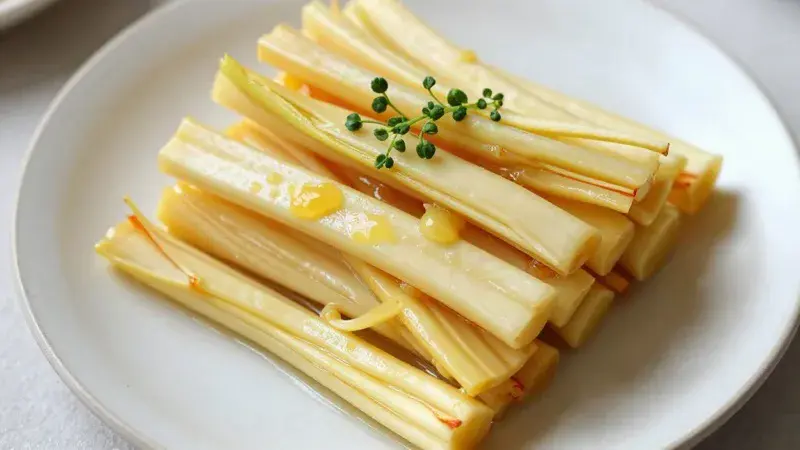
Fermented Vegetable Sticks (Brine Method)
Crunchy, probiotic-rich vegetables that support gut health and digestion.
Estimated. Worked out from the ingredients using the UK food composition tables, so treat it as a guide rather than a measurement. A typical recipe lands within about a quarter of the true figure. Makes about 4.
Ingredients
- 2 cups chopped vegetables (carrots, cucumber, radish, beetroot, or mixed)
- 1 cup filtered water
- 1 tsp sea salt (non-iodised)
- Optional: garlic clove, dill, peppercorns, ginger slice
Cooking Steps
Dissolve sea salt in filtered water to create a brine.
Pack vegetables tightly into a clean glass jar.
Add optional flavourings if using.
Pour brine over vegetables until fully submerged.
Use a fermentation weight or small jar to keep vegetables below the liquid.
Cover loosely with a lid or cloth.
Ferment at room temperature for 5–10 days.
Taste after 5 days; refrigerate once desired flavour is reached.
Plant & Growing Tips
Carrots
- Sow seeds directly into deeply worked, stone-free soil in early spring to late summer.
- Ensure consistent moisture for proper germination and root development.
Cucumber
- Plant seeds or seedlings in full sun after the last frost, providing a trellis or support for vining varieties.
- Water deeply and regularly, especially during fruiting, to prevent bitter fruits.
Radish
- Sow seeds directly in cool weather, ensuring consistent moisture for quick growth and tender roots.
- Plant in succession every 1-2 weeks for a continuous harvest.
Beetroot
- Plant seeds directly in well-drained soil, spacing them to allow roots to develop without crowding.
- Keep soil consistently moist to encourage tender root growth and prevent bolting.
Natural Pest Control
- Use floating row covers to protect young cucumber plants from striped and spotted cucumber beetles.
- Blast aphids off plants with a strong stream of water or introduce beneficial insects like ladybugs.
- Protect young radish and beetroot seedlings with row covers or fine mesh netting to deter flea beetles.
Harvest
Carrots
- Pull when roots are a desired size, typically 1-1.5 inches in diameter, but before they become woody.
- Harvesting too late can result in cracked or tough roots.
Cucumber
- Pick fruits when they are firm, green, and a good size for the variety, before seeds fully develop.
- Harvest frequently to encourage more production and prevent fruits from becoming yellow and seedy.
Radish
- Harvest quickly when roots are small and tender, typically 3-4 weeks after sowing.
- Radishes become hot and woody if left too long in the ground.
Beetroot
- Pull roots when they reach a desired size, usually 1.5-3 inches in diameter, and leaves can also be harvested young for greens.
- Overgrown beets can become tough and fibrous.
Storing & Freezing
Refrigerate once fermented. Keeps for up to 3 months when submerged in brine.