Global
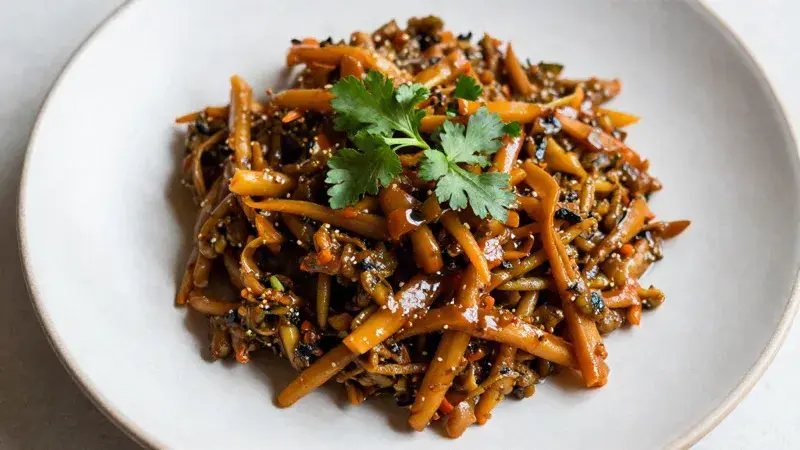
Fermented Vegetable Relish (Simple Chutney-Style)
A naturally fermented condiment that supports gut health while enhancing meals.
Estimated. Worked out from the ingredients using the UK food composition tables, so treat it as a guide rather than a measurement. A typical recipe lands within about a quarter of the true figure. Makes about 6.
Ingredients
- 2 cups finely chopped vegetables (carrot, apple, onion, cabbage, or courgette)
- 1–1½ tsp sea salt (non-iodised)
- 1 tbsp grated ginger or garlic (optional)
- Optional spices: mustard seed, cumin, coriander seed
Cooking Steps
Place chopped vegetables into a large bowl.
Sprinkle with sea salt and massage until juices release.
Add ginger, garlic, or spices if using and mix well.
Pack tightly into a clean glass jar, pressing down to remove air pockets.
Ensure vegetables are submerged in their own liquid.
Cover loosely with a lid or cloth.
Ferment at room temperature for 5–10 days.
Taste after 5 days; refrigerate when flavour is balanced.
Plant & Growing Tips
Carrots
- Sow seeds directly into deeply worked, stone-free soil in early spring to late summer.
- Ensure consistent moisture for proper germination and root development.
Onions
- Plant onion sets or seeds in full sun in well-drained soil as soon as the ground can be worked in spring.
- Provide consistent moisture, especially during bulb formation, and keep beds weed-free.
Cabbage
- Start seeds indoors 4-6 weeks before the last frost, then transplant seedlings into rich, fertile soil.
- Space plants adequately (18-24 inches apart) to allow for large head development.
Courgette
- Sow seeds directly after the last frost or start indoors a few weeks prior, ensuring plenty of space for sprawling plants.
- Keep plants well-watered, especially during flowering and fruit set, to prevent bitterness.
Natural Pest Control
- Cover young cabbage plants with floating row covers to prevent cabbage worms from laying eggs.
- Use physical barriers like fine mesh netting around carrot beds to deter carrot rust flies.
- Maintain good garden hygiene and remove plant debris to reduce overwintering onion thrips.
Harvest
Carrots
- Pull when roots are a desired size, typically 1-1.5 inches in diameter, but before they become woody.
- Harvesting too late can result in cracked or tough roots.
Onions
- Harvest when leaves begin to yellow and fall over, then cure in a dry, airy place for storage.
- Leaving them too long in the ground can cause rotting or splitting.
Cabbage
- Cut the head when it is firm and dense to the touch, leaving outer leaves to potentially produce smaller secondary heads.
- Harvest before heads split or become too loose.
Courgette
- Pick frequently when fruits are young and tender, typically 6-8 inches long, to encourage more production.
- Overly large courgettes tend to be watery and seedy.
Storing & Freezing
Refrigerate once fermented. Keeps for up to 3 months when submerged.