Global
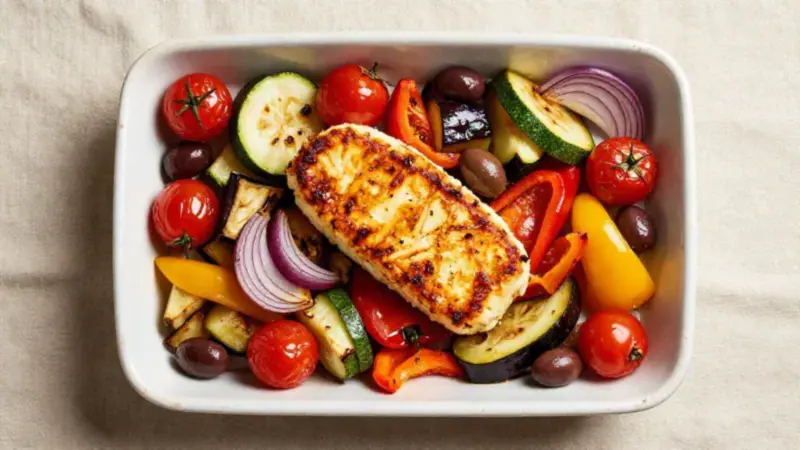
Crispy Halloumi with Roasted Mediterranean Veggie Traybake
A vibrant fusion of crispy halloumi and colorful roasted Mediterranean vegetables, perfectly balanced for a quick and healthy weeknight meal.
Estimated. Worked out from the ingredients using the UK food composition tables, so treat it as a guide rather than a measurement. A typical recipe lands within about a quarter of the true figure. Makes about 3.
Ingredients
- 250g halloumi cheese, cut into thick slices
- 200g baby potatoes, halved
- 1 zucchini, sliced
- 1 red bell pepper, chopped
- 1 yellow bell pepper, chopped
- 1 red onion, cut into wedges
- 2 tablespoons olive oil
- 1 teaspoon dried oregano
- Salt and pepper to taste
- Juice of 1 lemon
- Fresh parsley for garnish
Cooking Steps
1. Preheat the air fryer to 200°C (400°F).
2. In a bowl, toss the baby potatoes with 1 tablespoon of olive oil, dried oregano, salt, and pepper.
3. Place the seasoned baby potatoes in the air fryer basket and cook for 10 minutes.
4. While the potatoes are cooking, prepare the vegetables by tossing the zucchini, bell peppers, and red onion with the remaining 1 tablespoon of olive oil, salt, and pepper.
5. After the potatoes have cooked for 10 minutes, add the vegetables to the basket and shake gently to combine. Cook for an additional 8 minutes.
6. After the 8 minutes, push the veggies to one side and place the halloumi slices on the other side of the basket. Cook for 6 minutes until the halloumi is golden and crispy.
7. Once done, let the meal rest for 2-3 minutes. Squeeze fresh lemon juice over the halloumi and vegetables, and garnish with parsley before serving.
Optional Enhancements
- Use tofu instead of halloumi for a vegan option.
- Swap baby potatoes for sweet potatoes for a different flavor profile.
- Replace vegetables with whatever seasonal options you have on hand.
Plant & Growing Tips
Potatoes
- Plant certified seed potatoes in early spring after the last frost, in loose, well-drained soil.
- As plants grow, 'hill' soil around the stems to cover tubers and prevent them from turning green.
- Provide consistent moisture, especially during flowering and tuber formation, but avoid waterlogging.
Zucchini
- Direct sow seeds after the last frost when soil temperatures are warm, planting in full sun with ample space.
- Water deeply and consistently at the base of the plant to encourage strong growth and prevent powdery mildew.
- Consider companion planting with nasturtiums to deter squash bugs and borers.
Bell Peppers
- Start seeds indoors 8-10 weeks before the last frost and transplant outside when soil is warm and nights are above 55°F (13°C).
- Plant in full sun in rich, well-drained soil, providing consistent moisture without overwatering.
- Support taller pepper plants with stakes or cages to prevent branches from breaking under the weight of fruit.
Red Onion
- Plant onion sets or seeds in early spring as soon as the soil can be worked, in a location with full sun.
- Ensure well-drained, fertile soil and keep it consistently moist, especially during bulb formation.
- Space onions 4-6 inches apart to allow for proper bulb development and good air circulation.
Parsley
- Sow seeds in spring or late summer; parsley can be slow to germinate, so consider soaking seeds overnight.
- Plant in a location with full sun to partial shade, preferring partial shade in hotter climates to prevent bolting.
- Keep the soil consistently moist, but avoid waterlogging, and fertilize lightly if growth seems slow.
Natural Pest Control
- Monitor zucchini plants for squash bugs and their eggs; hand-pick them or scrape eggs off leaves.
- Use row covers over young pepper plants to protect them from flea beetles and early season aphids.
- Plant carrots or chamomile near onions to deter onion thrips and encourage beneficial insects.
- Spray parsley with a strong stream of water to dislodge aphids, or use insecticidal soap for heavier infestations.
Harvest
Potatoes
- For 'baby' potatoes, gently dig around the plant about 2-3 weeks after flowering, taking only a few small tubers.
- For mature potatoes, wait until the foliage has completely died back, then dig carefully to avoid damaging tubers.
- Cure mature potatoes in a cool, dark, humid place for 1-2 weeks before storing them in a cool, dark, well-ventilated area.
Zucchini
- Harvest zucchini when they are young and tender, typically 6-8 inches long, for best flavor and texture.
- Cut the stem with a sharp knife, leaving a small piece attached to the fruit to prolong shelf life.
- Frequent harvesting encourages the plant to produce more fruit; if left too long, zucchini become watery and seedy.
Bell Peppers
- Harvest green bell peppers when they are firm and full-sized, typically 60-75 days after transplanting.
- For red or yellow peppers, allow them to remain on the plant longer to fully ripen and develop their color and sweetness.
- Cut peppers from the plant with a sharp knife or shears, leaving a short stem attached.
Red Onion
- Harvest red onions when their tops begin to yellow and fall over naturally, usually in mid to late summer.
- Loosen the soil around the bulbs and gently pull them up, then cure them in a warm, dry, well-ventilated area for several weeks.
- Ensure onions are fully cured before storing to prevent rot and extend their shelf life.
Parsley
- Begin harvesting outer leaves when the plant has developed several sets of true leaves, cutting near the base of the stem.
- Use a 'cut-and-come-again' method to encourage continuous growth, never taking more than one-third of the plant at a time.
- Harvest regularly to prevent the plant from bolting (going to seed), which can make leaves bitter.
Storing & Freezing
Store leftovers in an airtight container in the fridge for up to 3 days. Reheat in the air fryer at 180°C (350°F) for 5-7 minutes.