Global
Chicken Fajita Prep Boxes
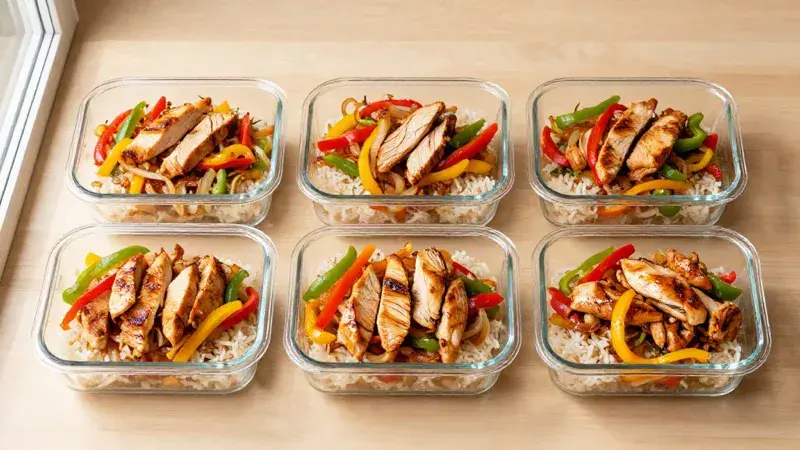
Sizzling fajita chicken with charred peppers and onions over rice. Five boxes, taco-night flavour all week.
Estimated. Worked out from the ingredients using the UK food composition tables, so treat it as a guide rather than a measurement. A typical recipe lands within about a quarter of the true figure. Makes about 4.
Ingredients
- 700g chicken breast, sliced
- 1 tbsp fajita seasoning
- 3 peppers, sliced
- 2 red onions, sliced
- 1 tbsp olive oil
- 1½ cups brown rice (dry)
- 1 lime
- Coriander; yogurt in side pots
Cooking Steps
Cook the rice; spread on a tray to cool fast.
Toss the chicken, peppers and onion in the seasoning and oil.
Roast on a hot tray at 220°C (425°F) for 18–20 minutes (or griddle in batches).
Build 5 boxes: rice + fajita mix; lime and coriander on top.
Cool, lid, refrigerate within 2 hours; yogurt in side pots.
Optional Enhancements
- Beef strips or halloumi
- Wrap in tortillas on the day
- Add black beans to stretch it
Plant & Growing Tips
Peppers
- Start pepper seeds indoors 8-10 weeks before the last frost, then transplant to a sunny spot with well-drained soil once temperatures are consistently warm.
- Provide sturdy stakes or cages to support pepper plants as they grow and bear fruit.
- Water deeply and consistently, especially during flowering and fruit development.
Red Onions
- Plant onion sets or seedlings in full sun in early spring, spacing them 4-6 inches apart in well-drained, fertile soil.
- Keep the soil consistently moist but not waterlogged, especially during bulb formation.
- Mulch around the plants to help retain moisture and suppress weeds.
Lime
- Grow lime trees in large containers in a sunny spot, bringing them indoors when temperatures drop below freezing.
- Water regularly, allowing the top inch of soil to dry out between waterings, and feed with a citrus-specific fertilizer during the growing season.
- Ensure good drainage to prevent root rot.
Coriander
- Sow coriander seeds every 2-3 weeks for a continuous supply, planting in a location with morning sun and afternoon shade in warmer climates to prevent bolting.
- Grow in containers for easy relocation to cooler spots or partial shade during hot weather.
- Ensure soil is consistently moist but not waterlogged.
Natural Pest Control
- Spray aphids off plants with a strong stream of water or an insecticidal soap solution.
- Use blue sticky traps near pepper plants to monitor and reduce thrips populations.
- Place cardboard collars around young onion and pepper stems at planting time to protect them from cutworms.
- Create barriers around susceptible plants using crushed eggshells or copper tape to deter slugs and snails.
Harvest
Peppers
- Pick peppers when they reach their full size and desired color, feeling firm to the touch.
- Leaving peppers on the plant longer allows them to change color and sweeten, but prolonged waiting can reduce overall yield.
Red Onions
- Harvest red onions when the tops begin to yellow and fall over naturally, typically in late summer to early autumn.
- After harvesting, cure them in a warm, dry, well-ventilated area for a week or two before storing.
Lime
- Limes are ready to pick when they are bright green, firm, and heavy for their size, typically about 2-3 inches in diameter.
- They will not ripen further once picked, so harvest when they reach desired maturity and flavor.
Coriander
- Snip outer leaves as needed, allowing the inner leaves to continue growing for a cut-and-come-again harvest.
- Harvest regularly to encourage new growth and delay flowering, which causes the plant to go to seed (bolt) and alters the flavor.
Storing & Freezing
Fridge 3–4 days. Reheat piping hot; add the yogurt after reheating, never before.