Global
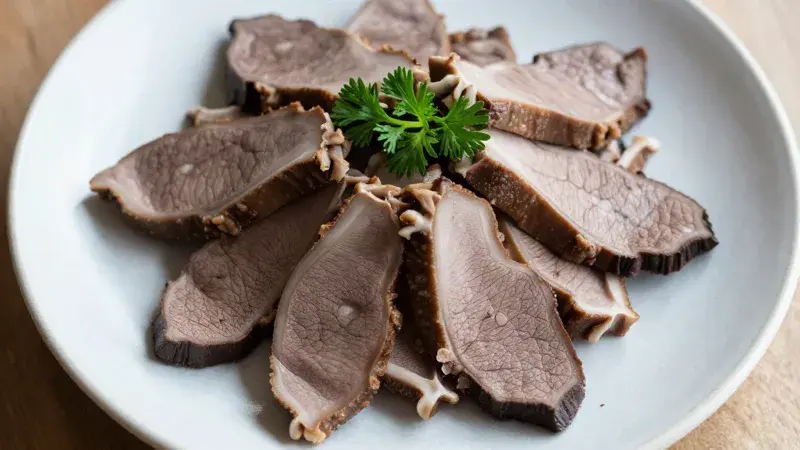
Beef Tongue Slices
Tender slow-boiled beef tongue, peeled and sliced.
Estimated. Worked out from the ingredients using the UK food composition tables, so treat it as a guide rather than a measurement. A typical recipe lands within about a quarter of the true figure. Makes about 6.
Ingredients
- 1 Beef tongue
Cooking Steps
Rinse the tongue under cold water and place it in a large pot. Cover with cold water and add a generous pinch of salt (optionally a bay leaf, peppercorns and a halved onion for flavour).
Bring to the boil, then reduce to a gentle simmer. Cover and cook for 2-3 hours, topping up water as needed, until a knife slides in easily.
Remove the tongue and let it cool for about 10 minutes, just until it is safe to handle; the skin peels much more easily while still warm.
Peel off the tough outer skin, starting from the base; it should come away in large pieces.
Trim any excess fat or gristle from the underside, then slice thinly across the grain.
Serve warm, or chill and slice cold for sandwiches.
Plant & Growing Tips
Radishes
- Not in the recipe, but grow for a crisp, peppery side to complement the rich beef. Sow seeds directly in cool weather, either early spring or late summer, in loose, well-drained soil.
- Plant seeds about 1/2 inch deep and 1 inch apart, thinning to 2-3 inches for optimal root development.
- Keep the soil consistently moist to prevent radishes from becoming woody or overly spicy.
Chives
- Not in the recipe, but grow for a delicate oniony garnish. Plant chives in full sun to partial shade in well-drained soil; they are excellent for container growing.
- Chives are perennial and can be grown from seed, established plants, or by dividing existing clumps.
- Water regularly, especially in dry periods, but avoid waterlogging.
Natural Pest Control
- Use floating row covers over radish beds to protect against flea beetles, which can chew small holes in leaves.
- Plant nasturtiums near radishes as a trap crop for aphids and other pests.
- Spray chives with a strong jet of water to dislodge aphids.
- Encourage natural predators like ladybugs by avoiding broad-spectrum pesticides in the garden.
Harvest
Radishes
- Begin harvesting radishes when their roots are about 1 inch in diameter, usually 3-4 weeks after sowing.
- Pull gently to check size; if left too long, radishes can become pithy, hot, or split.
- Harvest promptly in succession as they mature to ensure a continuous supply of tender roots.
Chives
- Snip leaves from the base of the plant with scissors, leaving about an inch of growth to encourage regrowth.
- Harvest regularly to promote new tender shoots and prevent flowering, which can make leaves tougher.
- The flowers are also edible and can be harvested and used as a garnish.