Global
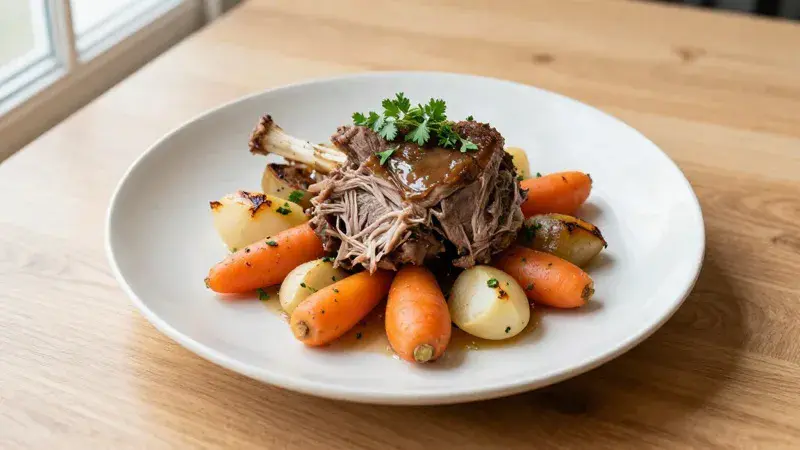
Slow-Cooked Lamb Shoulder with Root Veggies
Tender slow-cooked lamb shoulder with carrots, parsnips, and rosemary.
~260 mintotal~648 kcalper serving~51g protein~6g carbs~47g fat
Estimated. Worked out from the ingredients using the UK food composition tables, so treat it as a guide rather than a measurement. A typical recipe lands within about a quarter of the true figure. Makes about 6.
Ingredients
- 1 Lamb shoulder
- 2 Carrots
- 2 Parsnips
- 2 cups Bone broth
- 1 tbsp Olive oil
- to taste Rosemary
- to taste Salt & pepper
Cooking Steps
Sear lamb shoulder in a hot pan.
Place in slow cooker with chopped vegetables, broth, and herbs.
Cook on low for 6-8 hours.
Serve hot with pan juices.
Plant & Growing Tips
Carrots
- Sow seeds directly into loose, stone-free soil in early spring for a summer harvest, or late summer for an autumn crop.
- Ensure consistent moisture, especially during germination, and thin seedlings to 2-4 inches apart for proper root development.
- Choose a site with full sun and well-drained soil to prevent root rot.
Parsnips
- Direct sow seeds in early spring into deep, loose soil, as they have a long germination period.
- Keep the soil consistently moist until germination, which can take up to three weeks, and thin seedlings to 4-6 inches apart.
- Parsnips benefit from a few frosts before harvesting, which converts starches to sugars, enhancing their flavor.
Rosemary
- Plant rosemary in a sunny spot with well-drained soil; it thrives in Mediterranean conditions and can tolerate some drought once established.
- It can be grown from cuttings or small plants and is suitable for containers, especially in regions with cold winters where it can be moved indoors.
- Prune lightly after flowering to maintain shape and encourage new growth, avoiding heavy pruning into old wood.
Natural Pest Control
- Protect carrots and parsnips from carrot root fly by using fine mesh insect netting or by companion planting with strong-smelling herbs like rosemary or sage.
- Hand-pick any visible slugs or snails from young carrot and parsnip seedlings, especially after rain.
- Spray rosemary with a strong jet of water to dislodge aphids, or use a neem oil solution for more persistent infestations.
Harvest
Carrots
- Harvest carrots when their shoulders emerge from the soil and are about 1 inch in diameter, or when they reach your desired size.
- Loosen the soil around the roots carefully before pulling to avoid snapping the taproot.
- Leaving carrots in the ground too long can make them woody and less flavorful; harvest before they crack.
Parsnips
- Harvest parsnips after the first few hard frosts, typically in late autumn or early winter, when the roots are well-sized and sweet.
- Dig carefully to avoid breaking the long taproot, using a fork to loosen the soil around the plant.
- Parsnips can be left in the ground through winter in mild climates and harvested as needed, but they will become woody if left too long into spring.
Rosemary
- Snip sprigs of rosemary as needed, cutting stems just above a leaf node to encourage new branching.
- Harvesting regularly, but not more than one-third of the plant at a time, promotes bushier growth.
- The flavor is strongest before the plant flowers; older, woody stems can be less aromatic.