Global
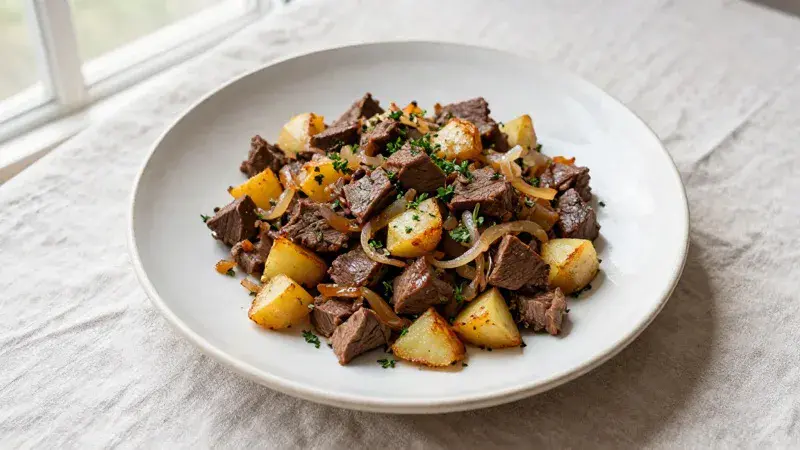
Beef Heart Hash
Diced beef heart pan-fried with eggs for a nutrient-packed breakfast
~25 mintotal300 kcalper serving23g protein0g carbs21g fat
Ingredients
- 150 g Beef heart, diced
- 2 Eggs
- 1 tbsp Butter or tallow
Cooking Steps
Pat the diced beef heart dry with paper towel; this helps it brown instead of steam.
Melt the butter or tallow in a frying pan over medium-high heat until hot.
Add the heart pieces in a single layer and pan-fry for 3-4 minutes, stirring occasionally, until well browned outside and just cooked through. Beef heart is best served no more than medium; overcooking makes it tough.
Season with salt and pepper, then tip onto a plate and keep warm.
Crack the eggs into the same pan and fry to your liking, about 2-3 minutes for a runny yolk.
Serve the eggs over the beef heart hash.
Plant & Growing Tips
Potatoes
- Not in the recipe, but grow for a hearty, traditional hash component. Plant certified seed potatoes in well-drained, slightly acidic soil after the last frost.
- Plant tubers 4-6 inches deep and 12 inches apart, hilling up soil around the stems as they grow to encourage more tubers.
- Ensure consistent moisture, especially during flowering and tuber formation, to prevent scab.
Parsley
- Not in the recipe, but grow to add a fresh, herbaceous garnish to cut the richness. Sow seeds in spring or late summer in a spot with partial shade and rich, moist soil.
- Parsley can be slow to germinate; soaking seeds overnight before planting can help speed this up.
- It grows well in pots, making it convenient for kitchen access.
Natural Pest Control
- Monitor potato plants for Colorado potato beetles and hand-pick adults and larvae into soapy water.
- Use neem oil spray on parsley to deter aphids and other soft-bodied pests.
- Plant companion herbs like borage near potatoes to deter tomato hornworms and other pests.
- Encourage beneficial insects like ladybugs and lacewings, which prey on parsley aphids.
Harvest
Potatoes
- Harvest 'new' potatoes about 7-8 weeks after planting, or when plants start to flower, by gently digging around the edges of the plant.
- For mature storage potatoes, wait until the foliage has completely died back, then dig carefully to avoid bruising.
- Cure storage potatoes in a cool, dark, humid place for 1-2 weeks before storing in a cool, dark, dry location.
Parsley
- Snip outer stems close to the base of the plant using scissors to encourage continuous new growth from the center.
- Harvest as needed, ensuring not to remove more than one-third of the plant at a time.
- Regular harvesting keeps the plant productive and prevents it from bolting (going to seed).