Mediterranean
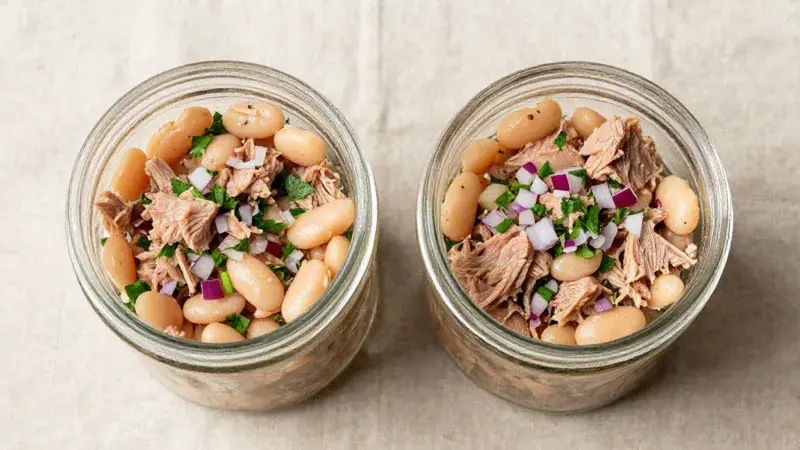
Tuna & White Bean Prep Pots
No-cook lunch pots: tuna, white beans, roasted peppers and olives in a lemon dressing. Five minutes to prep the whole week.
~20 mintotal~456 kcalper serving~36g protein~40g carbs~18g fat
Estimated. Worked out from the ingredients using the UK food composition tables, so treat it as a guide rather than a measurement. A typical recipe lands within about a quarter of the true figure. Makes about 4.
Ingredients
- 3 tins tuna in spring water, drained
- 800g cannellini beans, drained
- 1 jar roasted red peppers, sliced
- ½ cup olives
- ½ red onion, finely sliced
- 3 tbsp olive oil
- Juice of 1½ lemons
- 2 tbsp parsley
- Salt & pepper
Cooking Steps
Whisk the oil, lemon and seasoning.
Mix the tuna, beans, peppers, olives, onion and parsley.
Toss with the dressing (beans soak it up rather than going soggy).
Portion into 4–5 pots, lid, refrigerate.
Optional Enhancements
- Chickpeas or butter beans work
- Tinned salmon or mackerel
- Serve over leaves on the day
Plant & Growing Tips
Red Peppers
- Start seeds indoors 8-10 weeks before the last frost in the Mediterranean region, transplanting outdoors when soil is warm.
- Plant in full sun with well-drained soil, providing support with stakes or cages as plants grow.
- Water consistently, especially during flowering and fruiting, to prevent blossom end rot.
Red Onion
- Plant onion sets or sow seeds directly in early spring or late autumn in mild Mediterranean climates, in full sun.
- Ensure well-drained, fertile soil and space plants 4-6 inches apart to allow bulbs to swell.
- Keep the area weed-free and provide consistent moisture during bulb development.
Parsley
- Sow seeds directly in spring or early autumn in a sunny or partially shaded spot with consistently moist soil.
- Parsley can be slow to germinate; soaking seeds overnight before planting can help speed up the process.
- It grows well in containers, making it easy to bring indoors during colder periods if desired.
Natural Pest Control
- Hand-pick larger pests like slugs and snails from pepper plants, especially young seedlings.
- Use insecticidal soap or a strong spray of water to dislodge aphids from parsley and pepper leaves.
- Practice crop rotation for onions to prevent soil-borne diseases and deter onion maggots.
Harvest
Red Peppers
- Harvest peppers when they are fully red, firm, and have reached their mature size, usually 70-90 days after transplanting.
- Cut the stem with shears, leaving a short piece attached to the pepper to help it last longer.
- Picking regularly encourages the plant to produce more fruit.
Red Onion
- Harvest onions when their tops begin to yellow and fall over naturally, typically in mid to late summer.
- Loosen the soil around the bulbs and gently pull them up, leaving them to cure in a warm, dry, well-ventilated area for 1-2 weeks.
- Proper curing allows the neck to dry and the outer skin to form, which is essential for long-term storage.
Parsley
- Snip outer leaves and stems at the base of the plant as needed, leaving the inner leaves to continue growing.
- Regular harvesting encourages bushier growth and prevents the plant from bolting (going to seed) too early.
- Harvest before the plant flowers, as the leaves can become bitter once flowers appear.
Storing & Freezing
Fridge 3 days. A true no-cook prep: beans and tinned fish hold their texture where salads fail.