Asian
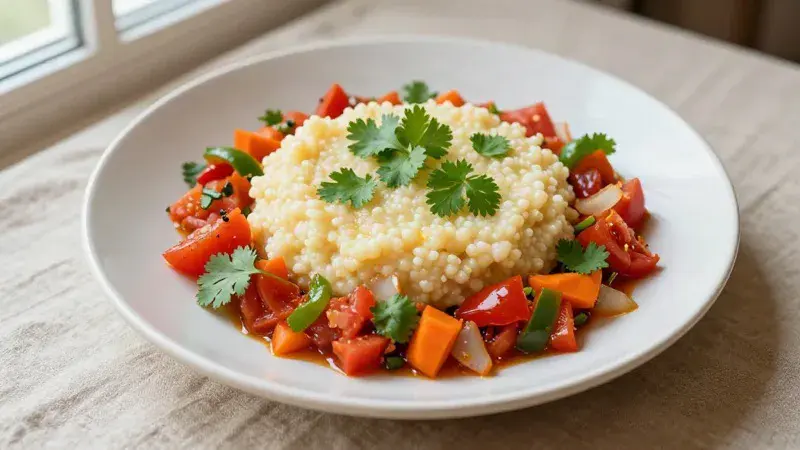
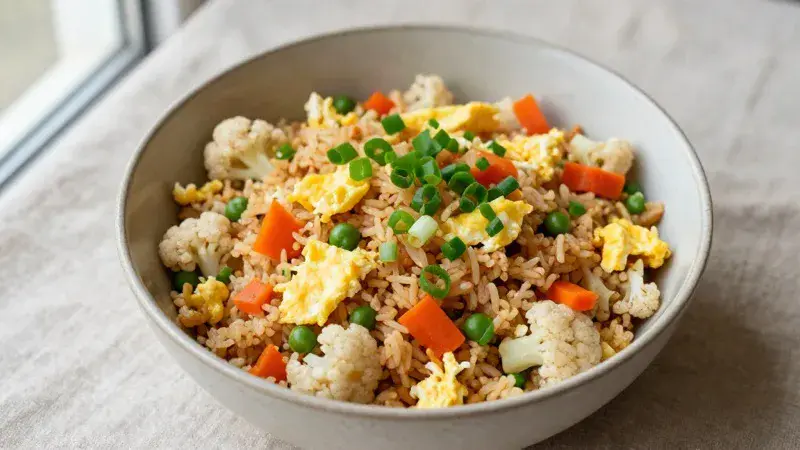
Cauliflower Fried Rice
A quick, veg-loaded 'fried rice' on cauliflower rice. Light, low-carb and every bit as satisfying.
~35 mintotal~171 kcalper serving~11g protein~14g carbs~8g fat
Estimated. Worked out from the ingredients using the UK food composition tables, so treat it as a guide rather than a measurement. A typical recipe lands within about a quarter of the true figure. Makes about 3.
Ingredients
- 1 cauliflower, riced
- 2 eggs, beaten
- 1 cup peas & carrots
- 2 spring onions
- 2 garlic cloves
- 1 tbsp soy sauce or tamari
- 1 tbsp sesame oil
- 1 tsp grated ginger
Cooking Steps
Scramble the eggs in a little sesame oil and set aside.
Stir-fry the garlic, ginger, peas and carrots 2 minutes.
Add the cauliflower rice and stir-fry 4–5 minutes.
Return the egg, add soy sauce and spring onions; toss 1 minute.
Serve hot.
Optional Enhancements
- Add prawns, chicken or tofu
- Half cauliflower, half brown rice
- Extra veg like edamame
Plant & Growing Tips
Cauliflower
- Plant cauliflower in a cool season, either spring or fall, providing consistent moisture and rich, well-draining soil.
- Blanch the heads by tying outer leaves over them when they are about the size of a chicken egg to prevent discoloration and maintain tenderness.
- Space plants 18-24 inches apart in rows, allowing ample room for head development.
Peas
- Sow pea seeds directly in early spring as soon as the soil can be worked, providing support like a trellis or netting for climbing varieties.
- Plant seeds 1 inch deep and 2 inches apart, in double rows spaced 6 inches apart, with 2-3 feet between double rows.
- Keep soil consistently moist but avoid overwatering, especially during flowering and pod development.
Spring Onions
- Sow seeds directly in early spring for a continuous harvest, or plant onion sets for quicker results.
- Plant in full sun and well-drained soil, spacing seeds or sets about 1 inch apart in rows.
- For a cut-and-come-again harvest, snip leaves as needed, leaving the bulb in the ground to resprout.
Garlic
- Plant individual cloves point-up in well-drained soil in late fall for harvest the following summer.
- Ensure a sunny location and space cloves 4-6 inches apart and 2 inches deep.
- Keep the bed weed-free and provide consistent moisture during active growth, reducing water as harvest approaches.
Ginger
- Plant ginger rhizomes in a warm, humid environment, ideally in a large pot or container in a greenhouse or indoors.
- Bury pieces of rhizome with an 'eye' facing upwards, about 2-4 inches deep, in rich, well-draining soil.
- Maintain consistent moisture and high humidity, and protect from temperatures below 10°C (50°F).
Natural Pest Control
- Monitor cauliflower for cabbage worms and remove them by hand or use Bacillus thuringiensis (Bt) spray.
- Protect young pea plants from birds with netting and spray aphids off plants with a strong stream of water.
- Use floating row covers to deter onion maggots from laying eggs near spring onions.
- Rotate garlic crops annually and ensure good drainage to prevent fungal issues and root rot.
Harvest
Cauliflower
- Harvest cauliflower when the head is firm, white, and 6-8 inches in diameter, before florets begin to separate.
- Cut the main stem below the head, leaving a few wrapper leaves attached to protect it.
Peas
- Harvest snap and snow peas when pods are plump and crunchy but before peas inside are too large.
- Pick shelling peas when pods are round and full, but still bright green and tender.
Spring Onions
- Pull spring onions when they are about 6-8 inches tall and the white base is still slender.
- For cut-and-come-again, snip the green tops when they are a few inches tall, leaving the base to regrow.
Garlic
- Harvest garlic when the lower third of the leaves have turned yellow or brown and fallen over, typically in mid-summer.
- Gently loosen the soil and lift bulbs, being careful not to bruise them, then cure in a dry, airy place for several weeks.
Ginger
- Harvest ginger after the plant has grown for 8-10 months and the leaves begin to yellow and die back.
- Carefully dig up the rhizome, break off a piece for use, and replant the rest to continue growing.
Storing & Freezing
Fridge up to 3 days.