Asian
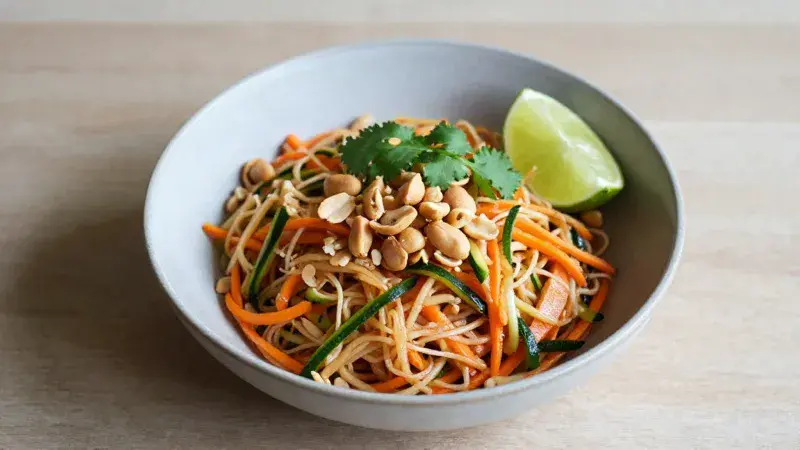
Carrot & Courgette Pad Thai
A veg-noodle pad Thai using ribboned carrot and courgette in a light peanut-lime sauce. Vibrant and gluten-free.
~20 mintotal~555 kcalper serving~23g protein~38g carbs~37g fat
Estimated. Worked out from the ingredients using the UK food composition tables, so treat it as a guide rather than a measurement. A typical recipe lands within about a quarter of the true figure. Makes about 1.
Ingredients
- 2 carrots, ribboned
- 2 courgettes, ribboned
- 1 egg, beaten
- 1 cup bean sprouts
- 2 spring onions
- 2 tbsp natural peanut butter
- 1 tbsp soy sauce or tamari
- Juice of 1 lime
- 1 tsp honey
- 1 tbsp sesame oil
- 2 tbsp crushed peanuts & coriander, to garnish
Cooking Steps
Whisk the peanut butter, soy, lime and honey into a sauce.
Scramble the egg in sesame oil and set aside.
Stir-fry the carrot and courgette ribbons 2 minutes.
Add the sauce, sprouts, spring onion and egg; toss 1 minute.
Serve with peanuts and coriander.
Optional Enhancements
- Add prawns or tofu
- Almond butter instead of peanut
- Extra chilli for heat
Plant & Growing Tips
Carrots
- Sow seeds directly in well-draining, stone-free soil after the last frost or in early spring/late summer in milder climates.
- Thin seedlings to 2-4 inches apart to allow roots to develop properly and prevent overcrowding.
- Keep soil consistently moist to prevent splitting and promote even growth.
Courgettes
- Sow seeds indoors 3-4 weeks before the last frost, or directly outdoors once soil has warmed and all danger of frost has passed.
- Provide plenty of sun and rich, well-draining soil, spacing plants 3-4 feet apart as they are vining.
- Water deeply and consistently at the base of the plant to encourage fruit production and prevent powdery mildew.
Spring Onions
- Sow seeds densely in a shallow trench in early spring or autumn for a continuous harvest.
- They prefer full sun and well-drained soil, and can be grown easily in containers.
- Keep the soil consistently moist, especially during dry spells, for tender greens.
Coriander
- Sow seeds directly in spring or autumn in a spot with partial shade to prevent bolting in hot weather.
- Plant in well-draining soil and water regularly to keep the soil moist but not waterlogged.
- For a continuous supply, sow small batches every 2-3 weeks.
Natural Pest Control
- Use fine mesh netting or row covers over carrot and spring onion beds to deter root maggots and carrot rust flies.
- Hand-pick larger pests like squash bugs from courgette leaves daily to prevent population build-up.
- Spray affected plants like coriander and courgettes with a diluted neem oil solution to control aphids and thrips.
- Ensure good air circulation around courgette plants and water at the base to help prevent powdery mildew.
Harvest
Carrots
- Harvest when roots are about 1 inch in diameter at the soil line, typically 60-80 days after sowing.
- Loosen the soil around the carrot before gently pulling to avoid snapping the root.
- Leaving them too long can make them woody and less flavourful.
Courgettes
- Pick when fruits are small and tender, typically 6-8 inches long; regular harvesting encourages more production.
- Cut the stem cleanly with a knife or pruners, leaving a short stub attached to the fruit.
- If left too long, they become large, seedy, and watery.
Spring Onions
- Harvest when stalks are pencil-thin, pulling the entire plant or cutting just above the soil line for a re-growth.
- For cut-and-come-again, leave the bulb in the ground to sprout new greens.
- Harvest regularly to encourage new growth and prevent them from becoming tough.
Coriander
- Snip outer leaves as needed once the plant is established, or harvest the entire plant before it bolts.
- Cut stems close to the base, taking care not to damage the crown.
- Harvesting frequently delays bolting, but once it flowers, the leaves' flavour diminishes.
Storing & Freezing
Best fresh; sauce keeps 4 days.