Perimenopause Symptoms: What Is Normal, and What Actually Helps
Perimenopause is the time before your periods stop for good, and changing periods, hot flushes, poor sleep, low mood and brain fog are all common, normal parts of it. Some symptoms are not normal and need a GP: very heavy bleeding, bleeding after sex or between periods, and any bleeding once your periods have stopped for a year. Help that works exists, including HRT, CBT, strength training and a few everyday changes.
The key insight: if you are 45 or over, you usually do not need a blood test to be told you are in perimenopause, and you do not need to wait for your periods to stop before asking for help. Treatment is based on your symptoms, not a hormone level.
Below: when perimenopause starts and how long it lasts, the common symptoms in one table, the red flags, and what the evidence says helps.
What Is Perimenopause, and When Does It Start?
The NHS describes perimenopause as the stage when your periods become irregular, and menopause as the point when they stop altogether. Menopause is defined as no period for 12 months while not using hormonal contraception. After that, you are postmenopausal.
Menopause usually happens between 45 and 55, though it can happen earlier. Because perimenopause is the run-up to it, many people first notice changes in their 40s.
How long does it last? The NHS says symptoms usually last 7 to 9 years, sometimes longer, and they can change along the way: hot flushes might ease, only for low mood or anxiety to take their place. Joint pain and vaginal dryness can carry on after menopause.
You can still get pregnant: the NHS advises contraception for 2 years after your last period if you are 40 to 49, and 1 year if you are 50 or over. HRT is not contraception.
Do You Need a Blood Test to Diagnose Perimenopause?
Usually not, if you are 45 or over. The NICE guideline on menopause, NG23 (Menopause: identification and management, first published November 2015, last updated April 2026), says that in otherwise healthy people aged 45 or over, perimenopause can be identified without laboratory tests if hot flushes or sweats have recently started and your cycle has changed. NICE advises against using a range of hormone and scan tests in this age group, and the NHS says there is no routine test.
If you are younger, NICE says a follicle-stimulating hormone (FSH) blood test may be considered at 40 to 45 with symptoms and changing periods, and under 40 when menopause is suspected.
Common Perimenopause Symptoms
Some people barely notice perimenopause; for others it affects work, relationships and sleep. The NHS notes that ethnic background can play a part: women from a Black ethnic background, for example, are more likely to have severe, longer-lasting hot flushes.
This table brings together symptoms listed by the NHS and NICE.
| Type | Common symptoms | Worth knowing |
|---|---|---|
| Cycle changes | Periods closer together or further apart, heavier or lighter | Often the first sign. Bleeding that gets much heavier should be checked |
| Physical | Hot flushes, night sweats, palpitations, worse headaches or migraines, joint and muscle aches, weight gain around the middle, dry skin, hair thinning | A hot flush can last several minutes and bring sweating, dizziness or anxiety |
| Sleep | Trouble getting to sleep or staying asleep | Often worse when night sweats wake you |
| Mood | Mood swings, low mood, anxiety | Can feel worse when you are short of sleep |
| Cognitive | Brain fog, poor memory, trouble concentrating | Often tied up with tiredness and poor sleep |
| Vaginal and urinary | Dryness, itching, painful sex, more UTIs, needing to pee more often | Often continues after menopause; treatments are available |
| Sexual and other | Lower sex drive, sensitive teeth or sore gums | Low libido has many possible causes, not only hormones |
Falling oestrogen also speeds up bone loss, raising the risk of osteoporosis. You will not feel it happening, which is why bone health is worth thinking about now.
Which Symptoms Are Not Normal?
Bleeding changes should not be put down to "just hormones" without a check. The cause is usually harmless, but occasionally it is an early sign of cancer, which is easier to treat when found early.
See your GP if:
- Your periods are much heavier than before. Signs of heavy periods include changing a pad or tampon every 1 to 2 hours, periods lasting more than 7 days, or clots larger than a 10p coin.
- You bleed between periods or after sex.
- You have any bleeding after 12 months without a period. This is postmenopausal bleeding and always needs checking, even if it was only once, only spotting, or pink or brown discharge. Your GP should refer you to see a specialist within 2 weeks.
- You are under 40 and have menopause symptoms or your periods have stopped. This could be premature menopause, also called premature ovarian insufficiency (POI), which NICE covers separately. The NHS says replacing hormones matters at this age because of the higher risk to your bones and heart. Menopause between 40 and 45 (early menopause) is worth raising too.
- You take HRT and still have irregular or heavier bleeding after 6 months.
- You have palpitations, or symptoms you are unsure about.
- Low mood is persistent or severe. If you have thoughts of harming yourself, get help straight away: contact your GP or NHS 111, or call Samaritans free on 116 123, any time. If you are in immediate danger, call 999.
What Actually Helps Perimenopause Symptoms?
HRT (hormone replacement therapy)
HRT replaces the oestrogen your body is making less of. NICE says HRT should be offered for hot flushes and night sweats, and can be considered for low mood that starts around the same time as other menopause symptoms. The NHS says it is effective at relieving most symptoms, including hot flushes, night sweats, sleep problems, anxiety, low mood and vaginal dryness, and it helps prevent osteoporosis.
Oestrogen comes as tablets, patches, gel or spray. If you still have your womb, you also need a progestogen to protect its lining, as a tablet, a combined patch or the hormonal coil. Vaginal oestrogen treats vaginal and urinary symptoms, and the NHS says it does not raise the risk of breast cancer or blood clots.
The risks, as the NHS describes them:
- Breast cancer: combined HRT slightly raises the risk, by around 5 extra cases per 1,000 women taking it for 5 years. The risk rises the longer you take it and falls after you stop. Oestrogen-only HRT carries little or no increase.
- Blood clots and stroke: HRT tablets slightly increase both, though the risk is still very low. Patches, gels and sprays do not increase clot risk.
- Overall: if you are under 60, have symptoms and are not at high risk of breast cancer or blood clots, the NHS says the benefits are likely to outweigh the risks.
HRT is not right for everyone; the choice is yours to make with a GP or nurse. NICE recommends a review 3 months after starting, then yearly.
CBT (cognitive behavioural therapy)
CBT is a talking therapy that helps you change how you respond to symptoms, such as the anxious thoughts that come with a hot flush or with lying awake. NICE now says clinicians should consider menopause-specific CBT for hot flushes and night sweats, for sleep problems linked to them, and for low mood that comes with them, either alongside HRT or instead of it.
In the UK MENOS 2 randomised controlled trial (Menopause, 2012), 140 women with problematic hot flushes and night sweats had group CBT, guided self-help CBT or no treatment. Both CBT formats significantly reduced how much of a problem the flushes were at 6 and 26 weeks, reduced night sweats, and improved mood and quality of life at 6 weeks. In England, you can refer yourself to NHS Talking Therapies without seeing a GP first.
If HRT is unsuitable, a GP may also discuss non-hormonal medicines. NICE recommends one called fezolinetant for moderate to severe hot flushes when HRT is unsuitable.
Strength training and exercise
NICE asks clinicians to stress keeping muscle mass and strength through physical activity, and the NHS recommends weight-bearing and resistance exercise to help protect your bones.
For hot flushes, the evidence is mixed. A 2014 Cochrane review of five trials with 733 women found low-quality evidence, not enough to show whether exercise in general treats hot flushes. Later, a Swedish trial in Maturitas (2019) randomised 65 postmenopausal women, 58 of whom finished, to 15 weeks of progressive resistance training three times a week or no change. Moderate to severe hot flushes fell by 43.6% with training and 2.0% without. One small trial is promising rather than proven, but lifting is worth doing for muscle and bone anyway. Our guide to strength training in perimenopause shows you where to start.
Sleep, alcohol, caffeine and food
The NHS suggests:
- Sleep: keep regular routines and a cool bedroom, wear light layers, and use a fan or cool shower for night sweats.
- Triggers: caffeine, alcohol, hot drinks, spicy food and smoking can all set off hot flushes. Keep a note of what comes before your worst ones.
- Alcohol: stay within the UK guideline of no more than 14 units a week, spread over 3 or more days. Drinking more may affect your symptoms.
- Bones: eat calcium-rich foods such as milk, yoghurt and kale, get some sunlight on your skin, and consider a vitamin D supplement.
- Weight and diet: a balanced diet and a healthy weight can help ease hot flushes.
Our course Sleep and Female Hormones explains how changing hormones affect sleep. If stress has you constantly wired, our article on what high cortisol really means separates fact from social media claims.
What About Supplements and Natural Remedies?
Be cautious. The NHS says there is very little evidence on how well herbal and complementary remedies work for menopause symptoms or how safe they are, and some can cause serious side effects with other medicines. NICE adds that unregulated products vary in quality, and that interactions have been reported, including with some breast cancer treatments, blood thinners and epilepsy medicines.
The research backs up that caution. A 2016 meta-analysis in JAMA of 62 trials with 6,653 women found plant oestrogen supplements were linked with only modest reductions in hot flushes, about 1.3 fewer a day, and no significant reduction in night sweats. Most trials had a high risk of bias.
Creatine is not a menopause treatment, but it has been studied for strength in women; our article on creatine for women covers what the research shows.
Check with your GP or pharmacist first if you:
- Take any regular medicine, especially blood thinners, epilepsy medicines, antidepressants or breast cancer treatment
- Have had breast cancer or another hormone-sensitive condition
- Are thinking of buying unregulated hormone products online, which NICE says have unknown safety and effectiveness
How Visionary Can Help
Visionary's cycle tracker lets you log changes to your periods and symptoms over months, so you have something concrete to show your GP. The sleep tracker can sync with Apple Health, so you can see how night sweats, alcohol or a new routine affect your nights. Training plans run across 8 levels, Foundation to Mastery, with strength and mobility programmes that adapt as you progress, and the Learn library includes our Perimenopause: Navigating the Transition course. Premium also includes a 15-minute 1-on-1 consultation with a qualified health professional. Visionary does not replace your GP and cannot prescribe HRT.
Start your 7-day free trial and build a clear picture of your perimenopause symptoms.
FAQ
What are the first signs of perimenopause?
According to the NHS, a change to your periods is usually one of the first signs: they may come more or less often and be heavier or lighter. Hot flushes, night sweats, poor sleep and mood changes are also common.
How long does perimenopause last?
The NHS says symptoms usually last 7 to 9 years, sometimes longer, and can change over time. Perimenopause ends once you have gone 12 months without a period.
Can I have a blood test to check if I'm in perimenopause?
If you are 45 or over and otherwise healthy, NICE says perimenopause can be identified from your symptoms and changing periods without a blood test. If you are under 45, a GP may sometimes arrange blood tests.
Is heavy bleeding normal in perimenopause?
Periods can get heavier, but the NHS advises seeing a GP if you are bleeding more than before, if heavy periods affect your life, or if you bleed between periods or after sex. Any bleeding after 12 months without a period always needs checking.
Is HRT safe?
For most people under 60 with symptoms who are not at high risk of breast cancer or blood clots, the NHS says the benefits are likely to outweigh the risks. Combined HRT slightly raises breast cancer risk, and tablets slightly raise the risk of clots and stroke, but patches, gels and sprays do not raise clot risk.
Do natural remedies help with perimenopause symptoms?
The evidence is weak. The NHS says there is very little evidence on how well herbal remedies work or how safe they are, and some interact with other medicines. Talk to a doctor or pharmacist before taking any.
This article is for general information only and is not a substitute for personalised medical advice. If you have heavy or unusual bleeding, any bleeding after your periods have stopped, menopause symptoms before 45, a history of breast cancer, blood clots or stroke, or you take regular medicines, speak to your GP or pharmacist before starting any treatment or supplement.
Related articles
 SleepWellbeingMental Health
The Clocks Go Back: How to Protect Your Sleep, Mood and Energy This Winter
The clocks go back on Sunday 25 October. How darker days affect sleep and mood, the winter blues versus SAD, and how to keep energy up in winter.
18 Oct 2026 · Sophie Sparkes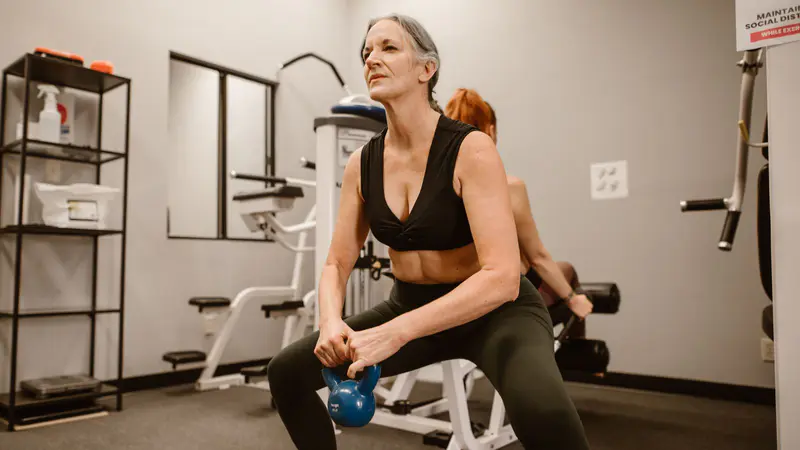 FitnessLongevityHolistic Health
Strength Training in Perimenopause: Where to Start
Why strength training matters in perimenopause and menopause, what the research shows for bone and muscle, and a simple plan to start.
13 Oct 2026 · Sophie Sparkes FitnessHolistic HealthLongevity
Why Do I Feel Unhealthy Even Though I'm Exercising Regularly?
Why you still feel tired despite regular exercise, and how sleep, nutrition, stress, and recovery can affect your overall wellbeing.
23 Sept 2026 · Sophie Sparkes