South African
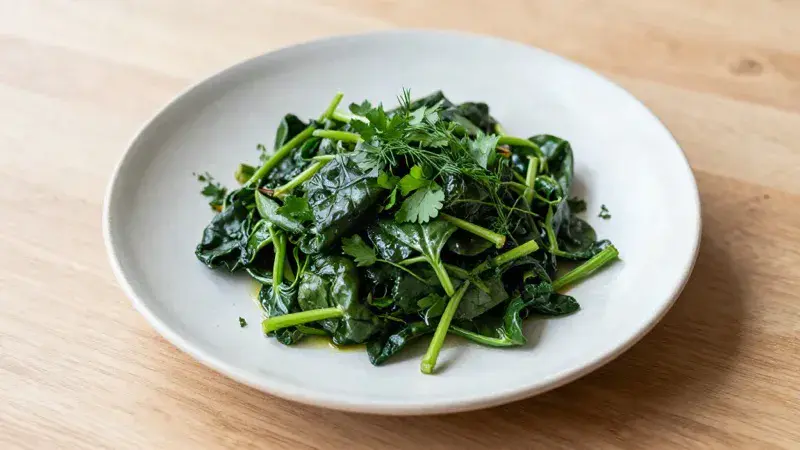
Morogo (African Wild Spinach)
A traditional African leafy green dish that's earthy, nutritious, and deeply rooted in heritage.
~30 mintotal~102 kcalper serving~2g protein~8g carbs~7g fat
Estimated. Worked out from the ingredients using the UK food composition tables, so treat it as a guide rather than a measurement. A typical recipe lands within about a quarter of the true figure. Makes about 2.
Ingredients
- 2 cups morogo leaves (amaranth, cowpea leaves, or wild spinach)
- 1 onion, chopped
- 1 tomato, chopped
- 1 garlic clove, minced
- 1 tbsp oil
- Salt & pepper
Cooking Steps
Rinse morogo thoroughly to remove sand.
Heat oil, sauté onion and garlic until soft. Add tomato and cook until saucy.
Add morogo leaves and cook 5–10 minutes until wilted and tender.
Add salt, pepper, and optional chilli or peanut butter.
Serve alongside pap, rice, or samp.
Optional Enhancements
- Add peanut butter for a traditional creamy version
- Add chilli for heat
- Add butternut cubes
- Add maize meal dumplings
Plant & Growing Tips
- Amaranth (Morogo): One of the easiest crops; thrives in poor soil, drought, and full sun; self-seeds freely
- Cowpea Leaves: Plant in warm climates; drought-tolerant; produces edible leaves and beans
- Tomatoes: Prefer hot sunny positions; deep compost-rich soil
- Onions: Plant in cooler months; harvest when bulbs swell
Natural Pest Control
- Hand-pick caterpillars from morogo leaves
- Sprinkle wood ash to deter beetles
- Use chilli-garlic spray for aphids
- Plant marigolds around leafy greens
Harvest
- Morogo: Harvest young leaves for best flavour; frequent picking encourages tender growth
- Tomatoes: Pick ripe and firm
- Onions: Pull once tops bend naturally
Storing & Freezing
Cooked morogo keeps 3 days refrigerated. Freeze blanched leaves up to 6 months.