Best Workout Apps for Women Over 40 in 2026
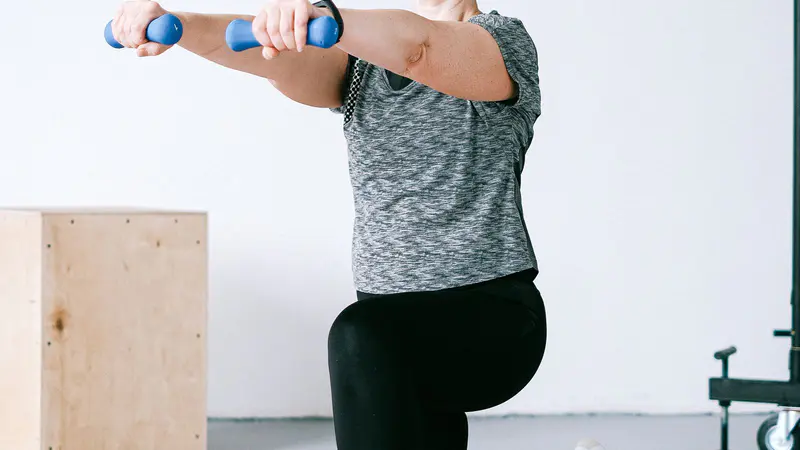
The best workout app for a woman over 40 is one that gets you doing progressive strength training at least twice a week and fits around perimenopause, not one with the most classes: Peloton for menopause-focused classes, Caliber for structured strength plans, Balance for menopause symptom tracking and information, Apple Fitness+ for Apple users, Nike Training Club as a free option, and Visionary for strength, nutrition and learning in one plan. None of them covers everything, so start with what your body needs and pick the app that fills the biggest gap.
The key insight: after 40, the most useful thing a workout app can do is make strength training a habit. Muscle and bone change faster around the menopause, and the evidence points to lifting progressively heavier things, adding some impact and balance work, and recovering well. Variety and leaderboards are a bonus.
Below: what to look for, a side-by-side table, an honest look at six apps, and when to check with your GP before you start.
What Should a Woman Over 40 Look For in a Workout App?
Progressive strength training, at least 2 days a week
The NHS physical activity guidelines say adults should do strengthening activities that work all the major muscle groups (legs, hips, back, abdomen, chest, shoulders and arms) on at least 2 days a week, alongside at least 150 minutes of moderate activity or 75 minutes of vigorous activity. A good app should build those strength sessions into a plan that gets gradually harder, not just offer a library you scroll through.
Protection for muscle as hormones change
Muscle loss around the menopause is not just ageing. In the long-running US SWAN study of women followed through the menopause transition, researchers found that at the start of the transition the rate of fat gain doubled and lean mass began to decline, and those changes continued until about 2 years after the final period. NICE's menopause guideline reflects this: recommendation 1.2.5 of NICE NG23 tells clinicians to explain to people experiencing menopause the importance of maintaining muscle mass and strength through physical activity.
Impact and balance work for bone
The Royal Osteoporosis Society recommends combining impact exercise (such as brisk walking, stair climbing, jogging or dancing) with muscle-strengthening exercise for the best effect on bone, and adding balance exercises to make falls and broken bones less likely. The NHS also suggests regular exercise with a focus on weight-bearing activity to help protect against weakening bones.
How heavy is heavy enough? The LIFTMOR trial gave an interesting answer. It randomised 101 postmenopausal women with low bone mass, average age 65, to either 8 months of twice-weekly, 30-minute supervised high-intensity resistance and impact training or a low-intensity home programme. Lumbar spine bone density rose by 2.9% in the training group and fell by 1.2% in the home group, and all measures of physical function improved more. Only one minor adverse event was reported. The catch: every session was closely supervised, the women were older than most readers here, and the trial was small. It supports building up to challenging loads, not jumping straight to them on your own.
Recovery and sleep
Poor sleep and night sweats are common in perimenopause, and the NHS suggests regular sleep routines and getting plenty of rest as part of managing symptoms. An app that pushes high-intensity sessions every day, with no rest days or easier options, can work against you. Look for planned rest, mobility sessions and a way to dial the plan down on bad nights.
Flexibility around symptoms
Some weeks, hot flushes, joint aches, heavy periods or low mood will change what you can do. Short sessions, home and gym versions, and the option to swap a workout without losing your progress all matter more than they did at 30. We cover what is typical in perimenopause symptoms: what is normal and what helps.
Cycle or symptom tracking
Periods often become irregular in perimenopause. Tracking your cycle and symptoms helps you spot patterns, plan harder sessions for better days, and gives you something concrete to take to your GP.
Workout Apps for Women Over 40 at a Glance
We read every price and feature below on each app's official website or US App Store page in November 2026. Prices change often and vary by country, so check before you subscribe. "Not listed" means we could not confirm the feature from an official page, not that it is definitely missing.
| App | Strength programme | Menopause-specific content | Cycle or symptom tracking | Nutrition | Free option | Paid price (US, read November 2026) |
|---|---|---|---|---|---|---|
| Peloton App | Yes, strength classes and programmes | Yes, Menopause Health Collection | Not listed | Not listed | Free app tier; 30-day trial of paid tiers | App One $15.99 a month or $159 a year; App+ $28.99 a month or $289 a year |
| Caliber | Yes, 120+ coach-designed plans on Caliber Plus | Not listed | Not listed | Nutrition targets on Plus; nutrition plan with Premium Coaching | Free version | Caliber Plus listed at several prices; Premium Coaching price not listed |
| Balance | Not listed (Pilates and yoga on balance+) | Yes, the app's main focus | Yes, symptoms and periods | Expert nutrition content and cook-along videos on balance+ | Free core app | balance+ listed at several prices |
| Apple Fitness+ | Strength workouts and Custom Plans | Not listed | Not listed | Not listed | 1 month free trial | $9.99 a month or $79.99 a year |
| Nike Training Club | Yes, gym and home strength programmes | Not listed | Not listed | Not listed | Free for Nike Members | Free |
| Visionary | Yes, 8 levels from Foundation to Mastery | Learn courses on perimenopause and menopause | Cycle tracker | Meal plans, grocery lists, photo food scanner | 7-day free trial | $14.99 a month per plan; Premium $29.99 a month |
The Best Workout Apps for Women Over 40 in 2026
Peloton App: Best for Menopause-Focused Classes
In October 2025 Peloton launched a Menopause Health Collection with Respin Health, with classes across running, strength and cycling for perimenopause and menopause, plus an official Menopause Health team in the app's community tab. The wider Peloton App offers thousands of instructor-led classes, including strength, yoga, HIIT, stretching and meditation, with live classes and goal-based programmes, and no equipment needed.
Its US App Store listing does not describe nutrition or cycle tracking. There is a free tier and a 30-day trial of the paid memberships. The store lists App One at $15.99 a month or $159 a year, and App+ (which Peloton says adds its Strength+ app) at $28.99 a month or $289 a year.
Caliber: Best for Structured Strength Plans
Caliber is built around resistance training. The free version lets you create and track unlimited workouts with 800+ exercises and form videos. Caliber Plus adds 120+ coach-designed training plans, a strength score, nutrition targets and lessons. Premium Coaching pairs you with a 1-on-1 trainer who designs your training and nutrition and reviews your progress each week.
If your main goal is getting properly stronger, Caliber is the most focused option here. Its listing does not mention menopause content or cycle tracking, so it treats you as a lifter rather than a woman in midlife. The store lists Caliber Plus at several monthly and yearly prices, and the Premium Coaching price is not shown, so check in the app.
Balance: Best for Menopause Symptom Tracking and Information
Balance is a UK-founded menopause app. It is not a workout app first. The free version includes evidence-based articles, symptom and period tracking, a health report to take to appointments, mood and sleep tracking and a community. The optional balance+ subscription adds live sessions, expert content on nutrition, pelvic floor and physical health, cook-along recipe videos, and Pilates, yoga and meditation sessions.
Its listing does not describe a progressive strength programme, so most women would pair it with one of the training apps here. The store lists balance+ at several monthly and yearly prices.
Apple Fitness+: Best for Apple Users Who Like Trainer-Led Classes
Apple Fitness+ offers 12 workout types including Strength, HIIT, Pilates, Yoga and Meditation, with sessions from 5 to 45 minutes and Custom Plans built around your favourite activities. Real-time metrics come from an Apple Watch, AirPods Pro 3 or a Bluetooth heart rate monitor. Apple lists it at $9.99 a month or $79.99 a year, with 1 month free for new subscribers.
Apple's page does not mention menopause content, nutrition or symptom tracking. It suits Apple users who want short, polished classes.
Nike Training Club: Best Free Option
Nike Training Club gives Nike Members free access to strength, conditioning, yoga, Pilates, recovery and mindfulness content. Its listing describes gym and home programmes, total-body strength work, workouts for beginners through to advanced, and weeks-long programmes.
Its listing does not mention menopause content, nutrition or cycle tracking, and you design the bigger picture yourself.
Visionary: Best for Strength, Nutrition and Learning in One Plan
Visionary is our own platform, so read this section with that in mind. Training runs across 8 levels, from Foundation to Mastery, with strength, HIIT and mobility programmes, an exercise video library and progress tracking, and plans adapt as you progress. Nutrition gives you customised meal plans (omnivore, vegetarian, vegan, keto and gluten-free), grocery lists and a photo food scanner. Learn includes courses such as Perimenopause: Navigating the Transition. There is also a cycle tracker, a sleep tracker that can sync with Apple Health, and Vic, the AI health assistant.
Where Visionary is weaker: there are no live classes and no menopause-specific workout collection like Peloton's. There is no ongoing human coach like Caliber's Premium Coaching; the only human contact is a single 15-minute consultation with a qualified health professional on Premium. And to get training, nutrition and learning together you need Premium at $29.99 a month ($299 a year). Each single plan is $14.99 a month or $149 a year, with a 7-day free trial on every plan.
How to Get the Most From Any App
- Start lighter than you think. Two full-body sessions a week, built up over weeks, is a sound base. Our guide to strength training in perimenopause has a simple starting plan.
- Add impact gradually. Brisk walking, stairs or small jumps if your joints and pelvic floor are happy. If you are thinking about loading your walks, read weighted vest walking: benefits, risks and how to start first.
- Eat enough protein to support training. Some women also ask about creatine; we look at the evidence in creatine for women.
If you also want meal plans and tracking in the same place, our all-in-one health and fitness apps comparison looks at that question more widely.
Should You Check With Your GP First?
Most women over 40 can start strength training safely, but some situations need a conversation first.
See your GP first if:
- You have a heart condition, or get chest pain, dizziness or unusual breathlessness when you exercise.
- You have osteoporosis with previous fractures, especially spinal fractures; the Royal Osteoporosis Society suggests talking to a doctor or physiotherapist first.
- You have pelvic floor symptoms such as leaking, or a feeling of heaviness or a bulge, which can be signs of pelvic organ prolapse.
- You have a current joint injury or pain that gets worse with movement.
- You have unexplained bleeding, such as bleeding between periods, after sex, or any bleeding after the menopause.
How Visionary Can Help
If you want one place to build strength, eat to support it and understand what is happening to your body, Visionary brings a training programme across 8 levels, customised meal plans with grocery lists and a photo food scanner, and an expert-led course library together, with a cycle tracker, a sleep tracker that syncs with Apple Health, and Vic, the AI health assistant, to answer questions as you go. You can take a single plan at $14.99 a month or choose Premium at $29.99 a month, which adds a 15-minute 1-on-1 consultation with a qualified health professional. Start your 7-day free trial and see whether a strength plan that adapts as you progress fits around your life after 40.
FAQ
What is the best workout app for women over 40?
It depends on what you need most. Peloton has a dedicated Menopause Health Collection, Caliber is the most focused on strength plans, Balance is best for menopause symptom tracking, Nike Training Club is a strong free option, and Visionary combines strength, nutrition and courses in one plan. Whichever you choose, make sure it includes progressive strength training at least twice a week.
Is strength training safe for women in perimenopause?
For most women, yes, and NICE's menopause guideline says people experiencing menopause should be told about the importance of maintaining muscle mass and strength through physical activity. Start with lighter loads and good technique, then build up gradually. Check with your GP first if you have a heart condition, osteoporosis with fractures, pelvic floor symptoms or a joint injury.
How many days a week should a woman over 40 strength train?
The NHS recommends strengthening activities that work all the major muscle groups on at least 2 days a week, plus at least 150 minutes of moderate activity across the week. Two well-planned full-body sessions are enough to start. Adding balance and impact work helps bone health too.
Is there a free workout app for women in menopause?
Nike Training Club is free for Nike Members and has gym and home strength programmes, though it does not list menopause-specific content. Balance has a free version with symptom and period tracking and menopause information, but not a strength programme. Peloton also has a free tier, with its full class library on paid memberships.
Do workout apps help with menopause symptoms?
Apps themselves do not treat symptoms, but the exercise they help you do can support muscle, bone, mood and sleep. The NHS lists regular exercise, rest and regular sleep routines among the things that can help with menopause and perimenopause symptoms. If symptoms are affecting your daily life, talk to your GP about treatment options too.
Should I track my cycle during perimenopause?
It can be useful, because periods often become irregular and symptoms can come and go. A record of your cycle and symptoms helps you plan training around harder days and gives your GP clearer information. Seek advice promptly about very heavy bleeding, bleeding between periods or any bleeding after the menopause.
This article compares apps for general information and is not medical advice. Prices and features were read on official websites and US App Store pages in November 2026 and may have changed. If you have a heart condition, osteoporosis with fractures, pelvic floor symptoms, a joint injury or unexplained bleeding, speak to your GP before starting a new exercise programme.
Related articles
 Weight LossVisionary PlatformStress Management
The Best Science-Backed Fitness Platforms With Personalised Training and Nutrition Plans
Find out what to look for in a fitness platform, from personalised training and nutrition guidance to flexible plans that support long-term progress.
28 Sept 2026 · Ashton de Pontes FitnessHabitsLongevity
Inside Visionary Learn: How Expert-Led Courses Turn Fitness Knowledge Into Lasting Habits
Visionary Learn uses expert-led courses and practical resources to help you understand fitness, build sustainable habits, and stay consistent.
25 Sept 2026 · Sophie Sparkes Weight LossRecoveryVisionary Platform
10 Best Wellness Platforms for Busy Professionals Who Want Training, Nutrition and Coaching in One Place
Discover how integrated wellness platforms combine personalised training, nutrition guidance, and learning to help busy professionals stay consistent.
24 Sept 2026 · Ashton de Pontes