What Is Somatic Exercise, and Does It Actually Work?
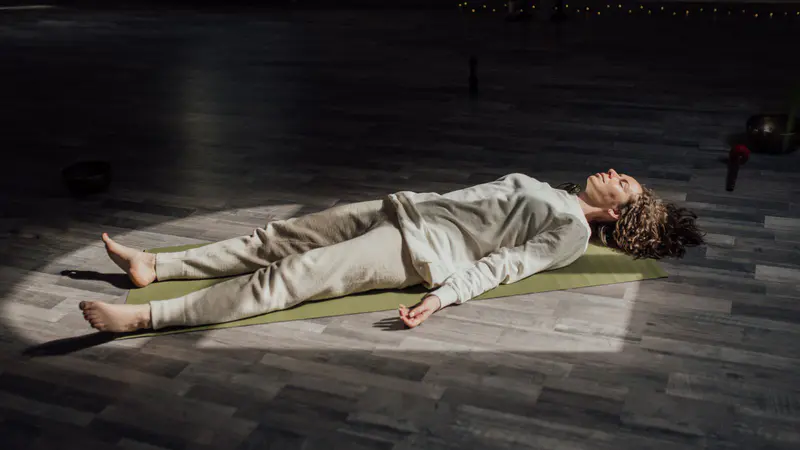
Somatic exercise is slow, mindful movement where the aim is to notice how a movement feels from the inside, rather than how far, fast or hard you can push it. Typical moves are gentle contract-and-release patterns done lying down or seated, with your attention on breath and muscle tension. The research behind it is small but encouraging for balance, body awareness and some kinds of back and neck pain. It is not a proven treatment for anxiety, trauma or weight loss, whatever social media says.
The key insight: somatic exercise is best thought of as a skill, not a workout. It teaches you to notice and let go of tension you hold without realising, which can make the rest of your training feel better. It will not replace strength training or cardio.
Below: where somatics comes from, what the studies say, who it suits, and a 10-minute routine you can do on the floor tonight.
What Does "Somatic" Mean?
"Soma" is the Greek word for body. In wellness, "somatic" describes any practice that works from your own felt sense of the body, the internal experience of movement, breath and tension.
The term was popularised by Thomas Hanna, a philosophy professor who coined the word "somatics" in the 1970s and developed Hanna Somatic Education. Hanna argued that many aches people put down to ageing are learned habits of muscle tension, which he called "sensory-motor amnesia". His signature technique is pandiculation: slowly tightening a muscle, then lengthening it even more slowly, like the full-body stretch you do on waking.
Other methods sit under the same umbrella:
- The Feldenkrais Method, which uses small, exploratory movements to build awareness and ease. It has the most research of any somatic approach.
- Somatic yoga and somatic Pilates, which slow familiar exercises right down and put attention on sensation.
- Somatic Experiencing, which is different again. It is a form of body-focused trauma therapy delivered by a trained practitioner, not an exercise class.
That last distinction matters. Much of the online buzz mixes up a gentle home routine with a clinical therapy.
What Does the Research Say?
The evidence is real but limited, and it varies a lot by method.
| Claim | What the evidence shows | Strength |
|---|---|---|
| Better balance and mobility in older adults | A 2022 meta-analysis of 16 randomised trials of the Feldenkrais Method found a significant improvement in the Timed Up and Go test | Moderate, small trials |
| Less neck, shoulder and upper back pain | Several trials found Feldenkrais improved pain, with results comparable to other physiotherapy | Low to moderate |
| Less chronic low back pain | Pain fell within groups, but generally no more than with comparison treatments | Low |
| Help with PTSD symptoms | One randomised trial of Somatic Experiencing (63 people) found reduced symptoms; a 2021 review called results promising but study quality mixed | Low, therapy not exercise |
| Weight loss or "releasing trauma stored in the hips" | No good evidence | None |
The 2022 review, by Berland and colleagues in the International Journal of Environmental Research and Public Health, concluded that the Feldenkrais Method has therapeutic effects comparable to other physiotherapy techniques for spine pain, and improves balance in older adults. The authors also warned that risk of bias was high and the findings should be taken with caution, because there are so few trials.
For trauma, a 2017 randomised trial in the Journal of Traumatic Stress found that Somatic Experiencing reduced PTSD symptoms and depression compared with a waiting list, and a 2021 scoping review found 16 studies with promising but mixed-quality results. Both describe sessions with a trained therapist, not a 10-minute video.
Hanna Somatic Education itself has very little controlled research. Most of the support is from practitioners and case series without a comparison group.
Why It Might Help, Even With Thin Evidence
There are sensible reasons a slow, attentive practice could help, even before the trials catch up:
- Slow breathing and slow movement calm the stress response. Long exhales are one of the simplest ways to shift your body towards rest.
- Attention changes how movement feels. Noticing where you brace, such as your jaw, shoulders or glutes, is the first step to letting go of it.
- It gets people moving who otherwise would not. If a high-intensity class feels impossible on a bad day, ten minutes on the floor is a real win.
- It is very low risk. Gentle, pain-free movement is suitable for most people, including many recovering from injury.
Who Somatic Exercise Suits
Somatic exercise is a good fit if you:
- Feel stiff or tense, especially at a desk all day
- Want a gentle way back into movement after illness, injury or a long break
- Find intense exercise stressful rather than energising
- Want to improve balance and body awareness as you get older
- Are in perimenopause or menopause and want something calming alongside strength work
It is not enough on its own if your goal is strength, bone density or heart health. For those, you still need resistance training and aerobic exercise. The UK Chief Medical Officers' guidelines recommend at least 150 minutes of moderate activity a week plus muscle-strengthening on two days. Somatics works best as the warm-up, the cool-down or the rest-day practice. Our guide to why rest and recovery matter explains why those days count.
A 10-Minute Somatic Routine for Beginners
Do this on a mat or carpet. Move slowly, breathe through your nose if you can, and stop anything that hurts. The aim is to feel more, not to stretch further.
| Minutes | Move | How to do it |
|---|---|---|
| 0 to 2 | Body scan | Lie on your back, knees bent. Notice where your body touches the floor and where you are holding tension. Breathe out slowly. |
| 2 to 4 | Arch and flatten | Gently arch your lower back off the floor as you breathe in, then press it flat as you breathe out. Repeat 6 to 8 times, slower each time. |
| 4 to 6 | Back lift (pandiculation) | Lying on your front, slowly lift your head, one arm and the opposite leg a few centimetres, hold for a breath, then lower over 5 seconds. Swap sides. 3 each side. |
| 6 to 8 | Knee drops | On your back, let both knees fall slowly to one side, pause, and bring them back with control. Alternate 6 times each side. |
| 8 to 10 | Shoulder and jaw release | Lift your shoulders towards your ears as you breathe in, then let them melt down over a long exhale. Unclench your jaw. Finish with three slow breaths. |
Try it three or four evenings a week for a fortnight and notice how your back, shoulders and sleep feel. If it helps, keep it. If you want to understand the "why" behind the calm, our course on understanding your nervous system goes deeper, and breathwork for nervous system regulation pairs well with it.
Somatic Exercise vs Yoga vs Pilates vs Stretching
| Somatic exercise | Yoga | Pilates | Static stretching | |
|---|---|---|---|---|
| Main aim | Awareness and releasing tension | Mobility, strength, breath, mindfulness | Core control and strength | Flexibility |
| Pace | Very slow | Slow to moderate | Moderate | Slow |
| Builds strength | Minimal | Some | Yes | No |
| Equipment | None | Mat | Mat or reformer | None |
| Best for | Stiffness, stress, rest days | All-round practice | Core and posture | Flexibility goals |
They overlap a lot, and plenty of yoga and Pilates teachers now use somatic cues. If you want the stronger end of the slow-movement spectrum, our course on Pilates foundations is a good next step.
When to Be Careful
Somatic exercise is gentle, but:
- See a GP or physiotherapist first if you have back pain with numbness, weakness, loss of bladder or bowel control, or pain after a fall or injury.
- For trauma or PTSD, look for a qualified, registered therapist. A routine from social media is not a substitute for treatment.
- If a move causes pain, stop. The method works by staying well within what is comfortable.
How Visionary Can Help
Visionary builds your training, nutrition and recovery into one plan, so gentle sessions like this have a place alongside strength work rather than competing with it. The Learn library has expert-led courses on the nervous system, breathwork and holistic mobility, and the sleep tracker lets you see whether evening wind-down routines change how you sleep.
Start your 7-day free trial and build a week that has room for both.
FAQ
What is somatic exercise?
Somatic exercise is slow, mindful movement that focuses on how a movement feels from the inside. It usually involves gentle contracting and releasing of muscles, done lying down or seated, with attention on breathing and tension. Common forms include Hanna Somatics and the Feldenkrais Method.
Does somatic exercise really work?
For balance in older adults and some neck and back pain, small randomised trials of the Feldenkrais Method show benefits similar to other physiotherapy. Evidence for other claims is weak or missing. It is low risk, so it is reasonable to try, but treat bold online claims with caution.
Can somatic exercise help you lose weight?
There is no good evidence that it does. It burns few calories. For weight loss, nutrition, strength training and regular aerobic activity matter far more.
Is somatic exercise good for anxiety?
Slow movement and long exhales can help you feel calmer in the moment, and many people find it relaxing. It is not a proven treatment for anxiety disorders. If anxiety affects your daily life, speak to your GP.
How often should I do somatic exercises?
Ten to fifteen minutes, three to five times a week, is a sensible start. Many people use it as an evening wind-down or on rest days between harder training sessions.
Is somatic exercise the same as Somatic Experiencing?
No. Somatic exercise is a gentle movement practice you can do alone. Somatic Experiencing is a body-focused trauma therapy delivered by a trained practitioner.
This article is for general information only and is not a substitute for personalised advice. If you have pain, an injury, a medical condition or a mental health concern, speak to your GP or a registered healthcare professional before starting a new exercise routine.
Related articles
 FitnessWellbeingRecovery
Cold Water Swimming and Cold Plunges: Benefits, Risks and How to Start
Cold water may help stress and sleep a little, but the evidence is thin and the risks are real. What the research says and how to start safely this winter.
8 Nov 2026 · Sophie Sparkes FitnessHolistic HealthPersonalised Plans
Cycle Syncing: What the Evidence Actually Says
Does cycle syncing your workouts work? What research shows about training across the menstrual cycle, and a simpler, evidence-led approach.
11 Oct 2026 · Sophie Sparkes FitnessHabitsHolistic Health
Brain Fog After Meals: Why It Happens and How Nutrition and Sleep Play a Role
Brain fog after eating can be linked to blood sugar changes, large meals, and poor sleep. Learn how nutrition habits may affect your focus.
22 Sept 2026 · Ashton de Pontes