Cold Water Swimming and Cold Plunges: Benefits, Risks and How to Start
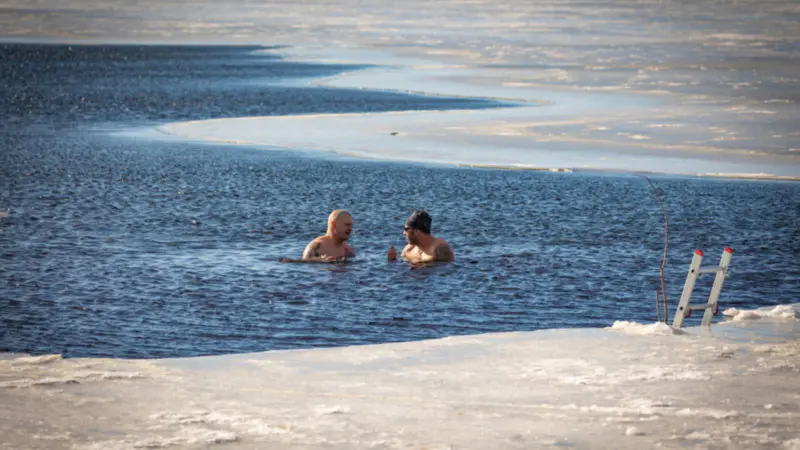
Cold water swimming and cold plunges may give a small lift to stress, sleep quality and general wellbeing, but the evidence is thinner than social media suggests. A 2025 systematic review found only 11 trials in healthy adults, with mixed results and no clear effect on mood, while the risks of cold water, from cold shock to hypothermia, are well documented. If you want to try it, the safest way in is slowly, briefly and never alone.
The key insight: the first minute in cold water is the most dangerous part, not the last. Most of what keeps you safe is about how you get in, who you are with and how you warm up, rather than how tough you are.
Below: what the research says, the main risks, a safe-start checklist, who should speak to a GP first, and how cold plunges fit with strength training.
What Does the Research Say?
Swimming with a group brings friendship, routine and time outdoors in daylight, which are worthwhile in their own right. The harder question is what the cold adds on its own.
A recent and careful look is a 2025 systematic review and meta-analysis in PLOS One by Cain and colleagues. It included only randomised trials in healthy adults using cold showers, ice baths or plunges at 15°C or below for at least 30 seconds.
| What they looked at | What they found |
|---|---|
| Studies included | 11 trials, 3,177 participants in total |
| Type of exposure | 10 used baths, 1 used showers; 7°C to 15°C, 30 seconds to 2 hours |
| Stress | Lower 12 hours after immersion, but no significant change immediately, at 1 hour, 24 hours or 48 hours |
| Inflammation | A short-term rise immediately and 1 hour after immersion |
| Immunity | No significant change in the short term; one cold shower study reported a 29% reduction in sickness absence |
| Sleep and quality of life | Improvements reported |
| Mood | No improvement found |
| Authors' caveat | Few trials, small samples and little diversity in who was studied |
An earlier 2022 review in the International Journal of Circumpolar Health by Espeland and colleagues screened the wider literature and kept 104 relevant studies. It found that cold water clearly changes many physiological and biochemical measures, and some studies suggested effects on body fat and insulin sensitivity. But most studies were small, often of one sex, and used different water temperatures, so clear conclusions were hard to draw. The authors also noted it is unclear whether regular winter swimmers are healthier because of the cold, or were simply healthier to begin with.
Physiologist Mike Tipton's review in Experimental Physiology reached a similar view: some claims for cold water have a credible rationale, while others still rest on anecdote.
So the honest answer is that cold water may help some people feel less stressed and sleep better, it is not a proven treatment for anything, and the benefits that people feel most strongly, such as mood, are the least well supported by trials so far.
The Risks Are Well Documented
Cold water shock and the first minute
The RNLI defines cold water as anything below 15°C, and notes that the average UK and Ireland sea temperature is around 12°C. In winter it drops further, to about 6 to 10°C.
Sudden cooling of the skin causes an involuntary gasp and fast, uncontrolled breathing. Blood vessels in the skin tighten, heart rate and blood pressure rise, and the RNLI warns this can cause heart attacks, even in the relatively young and healthy. Panic and gasping raise the risk of breathing in water.
The good news is that these effects pass in less than a minute. That is why the RNLI's advice is to take a minute and Float to Live:
- Tilt your head back with your ears under the water
- Relax and try to breathe normally
- Move your hands and legs gently to help you stay afloat
- It is fine if your legs sink; everyone floats differently
- Once your breathing is under control, call for help or swim to safety
You can read the full Float to Live guidance on the RNLI website, and practising your float in a pool is a good first step.
Swim failure and hypothermia
Stay in long enough and the cold reaches your muscles and nerves. Your arms and legs weaken and your stroke falls apart, even if you are a strong swimmer. This is often called swim failure, and the RNLI lists it alongside hypothermia as a real winter risk. It is one reason to swim parallel to the shore and stay in your depth.
Hypothermia means a body temperature below 35°C. The NHS lists the signs as shivering, pale and cold skin, blue or grey lips, slurred speech, slow breathing, tiredness or confusion. If you think someone has hypothermia, call 999.
Afterdrop
Many people are surprised to feel colder 10 minutes after getting out than they did in the water. The Outdoor Swimming Society explains that your cooled skin and muscles keep drawing heat from your core for a while after you leave the water. Afterdrop can bring shivering, faintness and nausea, and it is why you should not drive until you have stopped shivering.
A Safe-Start Checklist
This draws on the RNLI's winter swimming advice and the Outdoor Swimming Society's warming-up guidance.
- Never swim alone. Go with a friend or join a local group, and tell someone when you will be back.
- Know the water. Check the weather, tides and wave height. A familiar, supervised spot is best to start. If in doubt, stay out.
- Never jump in. Walk in slowly and wait until your breathing settles before you swim.
- Keep it short. Early dips can be a minute or two. Get out while you still feel in control, not when you start to struggle.
- Acclimatise gradually. Starting in early autumn and swimming regularly as the water cools is gentler than a first dip in January.
- Be seen and be ready. Wear a bright swim cap and consider a tow float. A wetsuit adds warmth and buoyancy. Carry a phone in a waterproof pouch.
- Stay in your depth and swim parallel to the shore.
- Warm up properly. Get dry and dressed quickly in layers, including a hat and gloves, stand on something rather than bare ground, sip a warm drink and move around.
- Go easy on hot showers. The Outdoor Swimming Society says warm baths or showers are a personal choice, but cold skin may not sense temperature well, so keep the water warm rather than hot. Saunas are another option.
- In an emergency, call 999 or 112 and ask for the Coastguard.
Who Should Speak to a GP First
The RNLI recommends that anyone new to open water speaks to their GP first, especially people with heart or other underlying conditions. Check before you start if you:
- Have a heart condition, an irregular heartbeat or chest pain
- Have high blood pressure
- Have Raynaud's or poor circulation
- Are pregnant
- Have epilepsy or any condition that can cause you to lose consciousness
- Have asthma or another breathing condition
- Take medicines that affect your heart rate, blood pressure or alertness (ask your GP or pharmacist)
Avoid cold water entirely after drinking alcohol, and stay out if you feel unwell.
Open Water, Cold Plunge or Cold Shower?
| Open water swim | Cold plunge or ice bath | Cold shower | |
|---|---|---|---|
| Typical temperature | UK sea about 6 to 12°C through the year; inland water can be colder | Set by you, usually below 15°C | Mains cold water, varies by season |
| Main risks | Cold shock, swim failure, hypothermia, currents and tides | Cold shock and fainting, especially alone or getting out | Slips; cold shock is milder |
| Need a buddy? | Always | Strongly advised | Not usually |
| Control over exposure | Least: conditions change | Good: easy to time and leave | Best: turn the tap |
| Research base | Mostly observational studies of winter swimmers | Most trials in the 2025 review used baths | One trial linked cold showers to fewer sick days |
| Good starting point? | With a group, after building tolerance | For short, timed dips | Yes: the gentlest way to test how you respond |
Cold Plunges After Strength Training
If you lift weights to build muscle, timing matters. A 2024 meta-analysis in the European Journal of Sport Science by Piñero and colleagues pooled 8 studies and concluded that cold water immersion straight after resistance training may blunt muscle growth, though the studies were of fair to poor quality. A 2022 meta-analysis of 10 studies (170 participants, 92% male) found it also reduced strength gains, mainly when only the trained limbs were cooled.
The practical takeaway: if muscle and strength are your goal, keep plunges away from your lifting sessions, for example on rest days or before training rather than straight after. Our guide to why rest and recovery matter covers other ways to recover well.
How Visionary Can Help
If cold water is part of your routine, it works best alongside steady training, good food and enough sleep. Visionary's Training plan has 8 levels from Foundation to Mastery, with strength, HIIT and mobility programmes and progress tracking, so you can plan plunges around your lifting days. The Learn library includes a course on cold exposure therapy and swimming foundations for building fitness in the pool first. Our sleep tracker can sync with Apple Health, so you can see whether your new habit changes your nights. Short winter days matter too: read our guide to vitamin D in winter.
Start your 7-day free trial and build a routine that suits you.
FAQ
Is cold water swimming good for you?
It may be for some people. A 2025 review of 11 trials found lower stress 12 hours after cold water immersion and improvements in sleep quality and quality of life, but no effect on mood. The trials were few and small. Swimming with others outdoors has its own social and wellbeing benefits.
What are the main risks of cold water swimming?
Cold water shock in the first minute, swim failure as your muscles cool, hypothermia and afterdrop once you are out. Cold shock raises heart rate and blood pressure and can trigger heart problems, even in healthy people. Never swim alone and always walk in slowly.
How long should I stay in cold water as a beginner?
Keep your first dips very short, a minute or two, and get out while you still feel in control. Build up slowly over weeks. There is no safe time that suits everyone, because water temperature, body size, wetsuits and experience all change how quickly you cool.
Should I have a hot shower after a cold swim?
Warm up first by drying off, dressing in layers and having a warm drink. The Outdoor Swimming Society says a warm shower is a personal choice, but cold skin may not sense heat well, so avoid very hot water. If someone may have hypothermia, the NHS advises against a hot bath and says call 999.
Do cold plunges stop muscle growth?
They may reduce it if taken straight after strength training. A 2024 meta-analysis of 8 studies found cold water immersion after resistance training may blunt muscle growth. If building muscle is your goal, plunge on a different day or well away from lifting.
This article is for general information only and is not a substitute for personalised advice. If you have a heart condition, high blood pressure, Raynaud's, epilepsy or a breathing condition, or are pregnant, speak to your GP before trying cold water. In an emergency at the coast, call 999 or 112 and ask for the Coastguard.
Related articles
 FitnessStress ManagementRecovery
What Is Somatic Exercise, and Does It Actually Work?
Somatic exercise is slow, mindful movement that puts how a movement feels first. What it is, what the research shows and a 10-minute routine to try.
29 Oct 2026 · Sophie Sparkes FitnessHolistic HealthPersonalised Plans
Cycle Syncing: What the Evidence Actually Says
Does cycle syncing your workouts work? What research shows about training across the menstrual cycle, and a simpler, evidence-led approach.
11 Oct 2026 · Sophie Sparkes Holistic HealthFitnessMetabolism
Top Wellness Apps With Expert Coaching
The best wellness apps combine personalised training, nutrition support, and expert guidance to help you build sustainable routines that adapt when life gets busy.
25 Aug 2026 · Ashton de Pontes