Walking Pads: Are Under-Desk Treadmills Worth It?
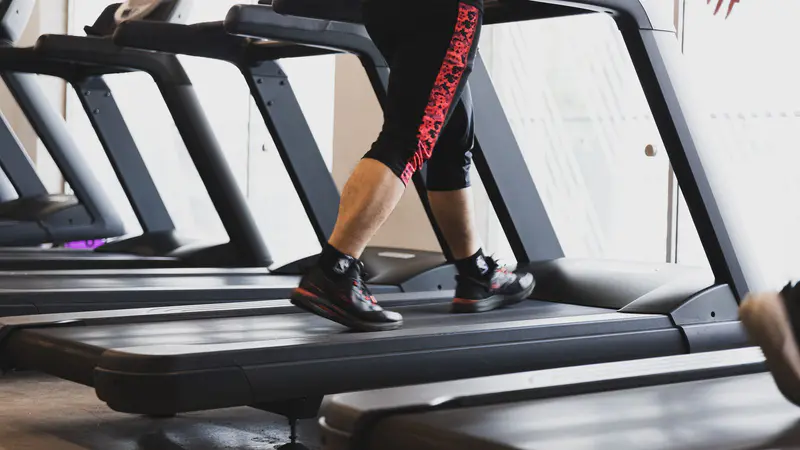
A walking pad can be worth it if you sit at a desk for most of the day: studies show treadmill desks add steps, burn about 105 more kilocalories an hour than sitting, and cut some sitting time. They have not been shown to reliably improve blood pressure, weight or other health markers, and they are not a replacement for proper exercise or strength training.
The key insight: a walking pad is best thought of as a way to swap some sitting for gentle movement, not as a workout. The evidence for that swap is real but modest, and it depends entirely on whether you keep using it after the first few weeks.
Below: what the research found, what it did not find, how to walk while you work, how to stay safe, and what to check before you buy.
What Is a Walking Pad?
A walking pad is a compact, low treadmill with no tall frame or handrail, usually designed for slow walking rather than running. Most are made to slide under a sofa or bed when you are done. Paired with a standing desk or a raised surface, it becomes a treadmill desk, which researchers usually call an "active workstation".
Most research used treadmill desks in offices and labs, not folding home pads. The principle is the same, but home use without anyone encouraging you may look different.
Why Does Sitting Less Matter?
The NHS physical activity guidelines ask adults to do at least 150 minutes of moderate activity a week, or 75 minutes of vigorous activity, plus strengthening activities on at least 2 days. Separately, they ask you to reduce time spent sitting or lying down and to break up long periods of not moving.
These are different goals. The NHS page on the benefits of exercise notes that many adults spend more than 7 hours a day sitting, and that you can hit your weekly activity target but still be at risk of ill health if you sit for long stretches.
A walking pad targets sitting time directly. Whether it counts towards the 150 minutes depends on your speed.
What Does the Research Show About Treadmill Desks?
Sitting time: a modest cut, with mixed evidence
The Cochrane review Workplace interventions for reducing sitting at work is the best-known summary. Its latest version, published in December 2018 and based on searches up to August 2017, included 34 studies with 3,397 participants. Sit-stand desks cut sitting at work by an average of 100 minutes a day in the short term (up to three months), though the evidence was rated low quality. For treadmill and cycling desks, the authors found the effects on sitting time were "unclear or inconsistent".
A later systematic review and meta-analysis in BMC Public Health (2021) looked only at treadmill desks: 13 studies, 351 people. In the workplace studies, treadmill desk users sat about 1.7 minutes less per hour across a 24-hour day than people with a normal desk. That is a real reduction, but a small one.
Steps: the clearest gain
In a 3-month randomised controlled trial of 41 office workers with overweight or obesity (Journal of Occupational and Environmental Medicine, 2014), those given access to a shared treadmill desk increased their daily steps by 1,622 compared with the control group. They also did 1.6 more minutes of light activity and 3.6 fewer minutes of sedentary time per working hour. The extra movement was mostly at 40 to 99 steps per minute, which is gentle walking.
For context, our guide to how many steps a day you really need explains why the biggest health gains come at the low end, when someone moves from very few steps to a few thousand more.
Energy expenditure: about 105 kcal more an hour
In the BMC Public Health review, lab studies showed treadmill desk users burned about 105 more kilocalories per hour than when sitting. An earlier study in the British Journal of Sports Medicine (2007) of 15 adults with obesity measured 72 kcal per hour sitting at work and 191 kcal per hour walking and working at a self-chosen 1.1 mph.
The authors of that 2007 study projected that swapping 2 to 3 hours of sitting a day could, in theory, lead to large weight loss over a year if nothing else changed. That was a calculation, not a result. In real life, appetite and the rest of your day tend to adjust, and the trials below did not show that kind of change.
Health markers: not proven
This is the part social media tends to skip. The BMC Public Health review found no significant difference in blood pressure in the lab studies, and no statistically significant changes in other metabolic outcomes in the workplace studies. The authors called for more research on cardiometabolic health.
So a walking pad may well be good for you, as more movement usually is, but the studies so far have not shown it lowers blood pressure, cholesterol or weight on its own.
What about the bigger picture?
A 2025 umbrella review in The Lancet Public Health pooled 36 systematic reviews covering 214 studies of workplace activity interventions. Sit-to-stand desks cut sedentary time by up to 75 minutes a day but did not significantly increase physical activity. No strategy consistently increased moderate to vigorous activity, the kind that brings the greatest health benefit.
A walking pad adds light activity; it will not make you fitter on its own.
| Outcome | What the research shows | How confident |
|---|---|---|
| Sitting time | Small reduction with treadmill desks; larger with sit-stand desks | Low, results inconsistent |
| Daily steps | About 1,600 more steps a day in one 3-month trial | Limited, one small trial |
| Energy burned | About 105 kcal more per hour than sitting, in lab studies | Fairly consistent |
| Blood pressure and metabolic markers | No significant changes found | Few, small studies |
| Typing and mouse work | Slower | Fairly consistent |
| Reading, attention, accuracy | Largely unaffected | Small studies |
Does Walking While Working Affect Your Work?
Yes, for some tasks. A systematic review and meta-analysis in the Journal of Physical Activity and Health found active workstations did not affect selective attention, processing speed, speech quality, reading comprehension or the accuracy of transcription. They did reduce typing speed and the efficiency of mouse clicking.
The authors suggested that arranging your tasks well keeps the effect on real work small. In practice, that means:
- Walk for calls, reading, video meetings with your camera off, and thinking time.
- Slow down or step off for detailed typing, spreadsheets and design work.
- Give yourself time to adjust. How much people improve with practice has barely been studied.
How Fast Should You Walk on a Walking Pad While Working?
Slower than you think. In the 2007 study, people working at a treadmill desk chose an average of 1.1 mph (about 1.8 km/h). That is a gentle stroll, well below the brisk pace the NHS describes as moderate activity, where you can still talk but not sing.
A simple approach:
- Start at the slowest setting and only increase once you can type and talk comfortably.
- Keep work walking slow and save faster walking for a separate session with no screen.
- If you want a proper workout, step away from the desk and walk briskly, or try an interval approach like Japanese walking.
How Long Should You Walk at Your Desk When You Start?
There is no official guideline for this, so start small. Begin with 15 to 20 minutes, once or twice a day, and add a little each week if your feet, knees and back feel fine. Breaking it into short sessions spread through the day fits the NHS advice to break up long periods of not moving, and is easier on your body than one long stretch.
Avoid going from zero to several hours in the first week. Sore feet, tight calves and aching hips are common signs you have done too much too soon.
Posture, Shoes and Desk Height
- Desk height: your screen should be at roughly eye level and your elbows at about 90 degrees when your hands are on the keyboard. Remember the walking deck raises you a few centimetres, so readjust your desk.
- Posture: stand tall, look ahead rather than down, and keep your shoulders relaxed. Do not lean on the desk to take your weight.
- Shoes: wear supportive trainers. Walking for long periods in socks, slippers or bare feet is harder on your feet.
- Mix it up: alternate walking, standing and sitting. All-day walking is not the goal.
If you want to understand alignment in more depth, our Posture and Movement Form course covers it.
Is a Walking Pad Safe?
For most healthy adults walking slowly, yes, but a treadmill is still a moving machine. General safety points:
- Read and follow the manufacturer's instructions, including the maximum user weight, the surface it should sit on (some say not to use it on carpet) and how much clear space it needs around it.
- Keep the area clear of cables, bags and rugs, and allow space behind the deck in case you step off the back.
- Keep children and pets away while it is running, and unplug or lock it when you are not using it.
- Do not cover the motor housing or block its vents.
- Use the safety stop (often a clip or remote) if the model has one, and know how to stop it quickly.
- Do not get on or off while the belt is moving fast.
Check with your GP first if you:
- Have problems with balance, dizziness or falls
- Have a recent injury or surgery, especially to your feet, knees, hips or back
- Have a heart condition, chest pain, or get breathless more easily than you would expect
- Are pregnant, especially if you have any pregnancy complications
- Have a condition affecting sensation in your feet, such as diabetes-related nerve damage
Stop and seek medical help if you get chest pain, unusual breathlessness, palpitations or feel faint while walking.
What to Look For When Buying a Walking Pad
If you are shopping in the Black Friday sales, focus on the features that match how you will use it, not on top speed or extras.
| Feature | Why it matters | What to check |
|---|---|---|
| Speed range | Desk walking happens at the bottom of the range | That the lowest speed is genuinely slow and adjusts in small steps |
| Deck length and width | A short or narrow deck feels cramped and can affect your stride | Enough length for a natural step at your height |
| Noise | You will use it on calls and near others | Stated noise level, and reviews about motor and belt noise |
| Maximum user weight | Exceeding it can be unsafe and may void the warranty | The manufacturer's stated limit, with a margin |
| Folding and storage | If it is a hassle to set up, you will use it less | Weight, wheels, and whether it fits where you plan to store it |
| Warranty and support | Motors and belts wear out | Length of warranty for motor and frame, and how repairs work |
| Safety stop | Lets you stop quickly | A safety clip, remote or auto-stop |
You will also need a standing desk or stable raised surface at the right height.
So, Are Walking Pads Worth It?
They can be, if you are honest about what they do. A walking pad adds steps and gentle movement to hours you would otherwise spend sitting, and the evidence supports that. It has not been shown to improve health markers on its own, and slow desk walking does not replace the brisk activity and strength work the NHS recommends.
If you use one, keep strength training in your week. Walking does not build much muscle, and the NHS asks for strengthening activities on at least 2 days. Our Strength Training for Long-Term Health course explains why it matters. If you already walk outdoors and want more from it, our guide to weighted vest walking covers the evidence and the risks.
How Visionary Can Help
A walking pad covers light movement; Visionary can help with the rest of your week. Training plans run across 8 levels, Foundation to Mastery, with strength, HIIT and mobility programmes and an exercise video library, and plans adapt as you progress. The Learn library includes expert-led courses on posture and strength training, and Vic, the AI health assistant in the app, can answer questions along the way. Premium also includes a 15-minute 1-on-1 consultation with a qualified health professional. Visionary does not make walking pads or wearables. If your schedule is unpredictable, see our guide to fitness apps that adapt to your schedule.
Start your 7-day free trial and pair your desk walking with strength training that fits around your work.
FAQ
Do walking pads help you lose weight?
Walking at a desk burns about 105 extra kilocalories an hour compared with sitting, according to lab studies. However, a 2021 review of treadmill desk studies found no statistically significant changes in metabolic outcomes in workplace studies, so weight loss is not guaranteed. Diet, sleep and the rest of your activity matter more.
How many steps can you get on a walking pad?
It depends on how long and how fast you walk. In one 3-month trial, office workers given access to a shared treadmill desk added about 1,600 steps a day. Gentle desk walking was mostly at 40 to 99 steps per minute.
Can you work and walk at the same time?
Yes, for many tasks. Research shows walking does not seem to affect attention, reading comprehension or accuracy, but it does slow down typing and mouse work. Save calls and reading for walking, and step off for detailed computer work.
What speed should I use on a walking pad at my desk?
Slow. In one study, people chose an average of 1.1 mph (about 1.8 km/h) while working. Start at the lowest setting and only go faster once you can type and talk comfortably.
Does walking at a desk count towards 150 minutes of exercise?
Usually not. The NHS counts moderate activity as brisk walking, where you can talk but not sing, and most people walk much slower than that while working. Desk walking helps reduce sitting time, which the NHS also advises, but you still need brisk activity and strength training.
Is a walking pad better than a standing desk?
They do different things. Sit-stand desks cut sitting time more in studies, but they do not add physical activity. A walking pad adds steps and burns more energy, but slows typing. Many people use both, alternating sitting, standing and walking.
This article is for general information only and is not a substitute for personalised medical advice. If you have a heart condition, balance problems, a recent injury, are pregnant, or have any condition that affects how safely you can walk, speak to your GP before using a walking pad. Always follow the manufacturer's safety instructions for your equipment.
Related articles
 FitnessLongevityHabits
How Many Steps a Day Do You Really Need? Why 7,000 Is the New 10,000
A 2025 Lancet review of 57 studies found 7,000 steps a day linked to a 47% lower risk of early death. What the evidence says, and how to get there.
24 Oct 2026 · Sophie Sparkes SleepWellbeingMental Health
The Clocks Go Back: How to Protect Your Sleep, Mood and Energy This Winter
The clocks go back on Sunday 25 October. How darker days affect sleep and mood, the winter blues versus SAD, and how to keep energy up in winter.
18 Oct 2026 · Sophie Sparkes FitnessLongevityHabits
Japanese Walking: What It Is, Does It Work, and a 4-Week Plan to Start
What is Japanese walking and does it work? The research behind 3-minute fast, 3-minute slow intervals, plus a simple 4-week plan to get started.
15 Oct 2026 · Ashton de Pontes