Alcohol, Sleep and Fitness: What Party Season Does to Your Body
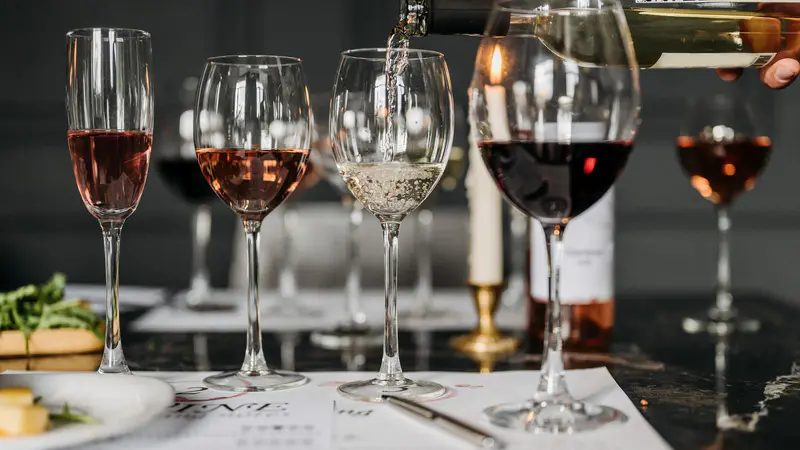
A few drinks in the evening usually help you fall asleep faster, then make the second half of the night more broken, with less REM sleep. Alcohol also slows muscle repair after training, keeps your heart working harder overnight and tends to make you eat more, so party season can quietly undo weeks of progress. You can still enjoy December; timing and amount matter more than most people think.
The key insight: most of the cost of a night out is paid while you sleep. Alcohol does not just add calories; it takes away some of the recovery your body would normally do overnight, and that shows up in how you feel, train and eat the next day.
Below: what the research shows about sleep, muscle recovery, heart rate, appetite and calories, the UK low risk guideline, and a practical plan for the next six weeks.
What Does Alcohol Do to Your Sleep?
Alcohol is a sedative, which is why a nightcap can feel like it helps. The problem is what happens later in the night.
A 2013 review in Alcoholism: Clinical and Experimental Research by Ebrahim and colleagues brought together every known study of alcohol and sleep in healthy volunteers. At all doses they found the same pattern:
- You fall asleep faster. Time to fall asleep went down.
- The first half of the night is more settled. Sleep was more consolidated early on, with more deep (slow wave) sleep.
- The second half is more broken. Sleep disruption increased later in the night, once your body has cleared much of the alcohol.
- REM sleep is pushed back and cut. The first period of REM sleep, the stage linked with dreaming, was delayed at every dose. Total REM sleep across the night fell in most studies at moderate and high doses, with no clear trend at low doses.
That is why you can sleep eight hours after a party and still wake up feeling unrested. The NHS puts it simply: alcohol can help some people fall asleep quickly but can disrupt sleep patterns and stop you sleeping deeply.
If your sleep is already under pressure from the darker mornings, our guide on protecting your sleep after the clocks go back is worth a read alongside this one.
How Does Alcohol Affect Training and Muscle Recovery?
Muscle gets stronger after training as your body builds new muscle protein, a process called muscle protein synthesis. Alcohol appears to slow it.
The best known study is a 2014 trial in PLOS ONE by Parr and colleagues. Eight physically active men did a hard session of weights followed by cycling, three times. After each session they had either protein only, alcohol with protein, or alcohol with carbohydrate. Muscle samples were taken over the next eight hours.
| What they compared | Muscle protein synthesis versus protein only |
|---|---|
| Alcohol plus protein | 24% lower |
| Alcohol plus carbohydrate | 37% lower |
Muscle building still rose after exercise in every condition, just less with alcohol, even alongside a protein drink. Two caveats: the dose was very large, about 12 standard drinks (Australian measures), and this was a small study of eight men. It shows a real effect after heavy drinking; it does not tell us what one or two drinks do.
The practical message: if you train hard on the day of a big night, you will probably get less out of that session, and protein does not cancel the effect. Our post on why rest and recovery matter for sustainable progress explains why recovery is where the progress actually happens.
What Happens to Your Heart Rate and HRV After Drinking?
If you wear a fitness watch or ring, you may have noticed a higher resting heart rate and a lower heart rate variability (HRV) score after a night out. HRV is the small variation in time between heartbeats; higher usually means a more relaxed, "rest and recover" state.
A large 2018 observational study in JMIR Mental Health by Pietilä and colleagues tracked heartbeats in 4,098 Finnish employees during normal life, comparing each person's nights after drinking with their nights without. It looked at the first three hours of sleep.
- Alcohol was linked with more "fight or flight" activity and less "rest and digest" activity, in a dose-dependent way.
- An HRV-based measure of physiological recovery fell on average by 9.3, 24.0 and 39.2 percentage units after low, moderate and high alcohol intake.
- The effect showed up even at the low level, which the study defined as up to 0.25 g of alcohol per kg of body weight. For someone weighing 70 kg, that is about 17.5 g of alcohol, or roughly two UK units.
- Being physically active or older did not protect people from the effect; it was actually stronger in younger people.
This was observational, drinking was self-reported, and some authors worked for the company that made the monitors. Still, it is a good reason to treat a low HRV score the morning after as a cue to go easy. Our course on heart rate variability explains how to read these numbers without obsessing over them.
Why Do You Eat More When You Drink?
The midnight chips and the next-day fry-up are not a lack of willpower.
A 2019 systematic review and meta-analysis in the British Journal of Nutrition by Kwok and colleagues looked at 22 controlled studies with 701 healthy adults. The studies consistently found that people do not eat less to make up for the energy in alcoholic drinks. In the pooled results:
- Food intake rose by an average of 343 kJ (about 82 kcal) when people had alcohol compared with a non-alcoholic drink.
- Total energy intake, food plus drink, rose by an average of 1,072 kJ (about 256 kcal).
The results mostly come from adults aged 18 to 37, and the studies varied a lot, so treat these as rough averages. Add a poor night's sleep and the next day often brings more snacking, which is why "eat first" is one of the most useful habits below.
How Many Units and Calories Are in Common Drinks?
Alcohol itself carries 7 calories per gram, almost as many as fat, according to the NHS, and mixers can add more. Here are some common drinks using NHS figures.
| Drink | Units | Calories |
|---|---|---|
| Standard glass of wine (175ml, 12%) | 2.1 | Up to 158 kcal |
| Pint of beer (568ml, 5%) | About 2.8 | Up to 222 kcal |
| Double measure of spirits (50ml, 40%), no mixer | 2 | 100 kcal |
| Bottle of alcopop (275ml, 4.5%) | About 1.2 | 154 kcal |
| Glass of cream liqueur (50ml, 17%) | About 0.9 | 153 kcal |
| Large measure of fortified wine such as port (75ml, 17.5%) | About 1.3 | 102 kcal |
Units for wine and spirits are from the NHS alcohol units guide; the others use the NHS formula: strength (ABV) x volume (ml) ÷ 1,000. Party glasses are often bigger, so real numbers can be higher. Three standard glasses of wine is up to 474 kcal before any food, which is why our 10-week plan to avoid Christmas weight gain treats drinks as part of the plan rather than an afterthought.
How Much Is Low Risk? The UK Guideline
The UK Chief Medical Officers' low risk drinking guidelines say that, to keep health risks low, men and women are advised:
- Not to drink more than 14 units a week on a regular basis
- To spread drinking over 3 or more days if you regularly drink as much as 14 units a week
- To have several drink-free days each week if you want to cut down
The NHS says 14 units is about 6 pints of average-strength beer or 10 small glasses of lower-strength wine. This is a low risk guideline, not a safe limit: the Chief Medical Officers say no level of regular drinking can be considered completely safe in relation to some cancers. It is a limit, not a target, and not something to save up for one Saturday.
A Practical Plan for Party Season
You do not need to stop drinking to get through December feeling well. Most of these steps come from NHS advice on cutting down.
Plan your drink-free days. Mark them in the calendar now. Several a week give your sleep and recovery a chance to catch up.
Eat first. Have a proper meal with protein and vegetables before you go out, so you are less ravenous when the canapés come round.
Alternate with water. Have a glass of water or a soft drink between alcoholic drinks. It halves your pace without anyone noticing.
Go smaller and lower. Choose a small glass, a bottle instead of a pint, or a lower-strength drink. Low and no alcohol options are an easy swap for part of the evening.
Set a stop time. The NHS says the average adult processes about one unit an hour, though this varies. Finishing a few hours before bed lets your body clear more alcohol before you sleep. After several drinks you will not clear it all, so this reduces the effect rather than removing it.
Protect your wake time. Get up near your usual time and get daylight early, even after a late night. Our course on circadian biology, light, sleep and health explains why a steady wake time helps your body clock recover.
Train smart the day after. If you slept badly, swap heavy or high intensity work for a walk or mobility session, and put your hardest workouts after drink-free nights.
Skip the quick fixes. No supplement undoes a heavy night; our article on magnesium for sleep shows how modest even popular sleep supplements are.
When Should You Get Support?
Party season can be a good moment to notice your drinking. The NHS says you may need help if you often feel the need to have a drink, other people warn you about how much you drink, or you think your drinking is causing you problems.
See your GP if:
- You are worried about how much you drink, or find it hard to stop once you start
- You regularly drink more than 14 units a week and want help cutting down
- You use alcohol to cope with stress, low mood, anxiety or poor sleep
- You get shaky, sweaty, anxious or sick in the morning until you have a drink. Do not stop suddenly without advice, as stopping overnight can be harmful if you are dependent
- You take regular medicines, are pregnant or trying for a baby, or have a liver, heart or mental health condition
Call 999 if someone has severe withdrawal symptoms such as hallucinations, seizures or severe shaking. You can also call Drinkline, the free national alcohol helpline, on 0300 123 1110 (weekdays 9am to 8pm, weekends 11am to 4pm), in confidence, about your own drinking or someone else's.
How Visionary Can Help
Visionary's sleep tracker records your sleep each night and can sync with Apple Health, so you can compare nights after drinking with drink-free nights. Training plans include strength, HIIT and mobility programmes, so on a rough morning you can choose a mobility session rather than skip. Customised meal plans and grocery lists keep the rest of the week steady, the photo food scanner shows calories and macros, and Vic, the AI health assistant in the app, can help you plan a lighter day. Premium includes a 15-minute 1-on-1 consultation with a qualified health professional.
Start your 7-day free trial and go into party season with a plan for your sleep, training and food.
FAQ
Does alcohol help you sleep?
It can help you fall asleep faster, but sleep quality is worse. Research shows the second half of the night is more disrupted, and REM sleep is delayed and, at moderate and higher doses, reduced.
How long before bed should I stop drinking?
There is no exact rule, but earlier is better. The NHS says the average adult processes about one unit an hour, so stopping a few hours before bed gives your body time to clear some of the alcohol. After several drinks, some alcohol will still be in your system at bedtime.
Does alcohol ruin your gains?
A single drink is unlikely to undo your training. A small 2014 study found heavy drinking after a hard session cut muscle protein synthesis by 24% to 37%, even with protein. Regular heavy drinking around training is likely to slow your progress, so keep your hardest sessions away from big nights.
Should I work out the day after drinking?
Gentle movement such as a walk or mobility session is fine for most people. If you slept badly or feel unwell, skip high intensity work or heavy lifting until you have recovered, and drink water and eat before you train.
Why is my HRV low after drinking?
Alcohol shifts your nervous system towards "fight or flight" during sleep. A study of over 4,000 people found HRV-based recovery scores fell even after low amounts of alcohol, with larger drops at higher amounts. A low score the morning after is a sign to take it easy.
How many calories are in a glass of wine?
According to the NHS, a standard 175ml glass of 12% wine contains up to 158 kcal and 2.1 units. A large 250ml glass contains 3 units, so more calories too.
This article is for general information only and is not a substitute for personalised advice. If you are pregnant or trying for a baby, take regular medicines, have a liver, heart or mental health condition, or are worried about your drinking, speak to your GP or pharmacist. If you think you may be dependent on alcohol, get medical advice before stopping.
Related articles
 FitnessHabitsLongevity
Inside Visionary Learn: How Expert-Led Courses Turn Fitness Knowledge Into Lasting Habits
Visionary Learn uses expert-led courses and practical resources to help you understand fitness, build sustainable habits, and stay consistent.
25 Sept 2026 · Sophie Sparkes FitnessHabitsHolistic Health
Brain Fog After Meals: Why It Happens and How Nutrition and Sleep Play a Role
Brain fog after eating can be linked to blood sugar changes, large meals, and poor sleep. Learn how nutrition habits may affect your focus.
22 Sept 2026 · Ashton de Pontes WellbeingSleepFitness
Perimenopause Symptoms: What Is Normal, and What Actually Helps
The common symptoms of perimenopause, which ones need a GP, and what the evidence says about HRT, CBT, exercise, sleep, alcohol and supplements.
13 Nov 2026 · Sophie Sparkes