Resting Heart Rate: What Is Normal, and How to Lower It
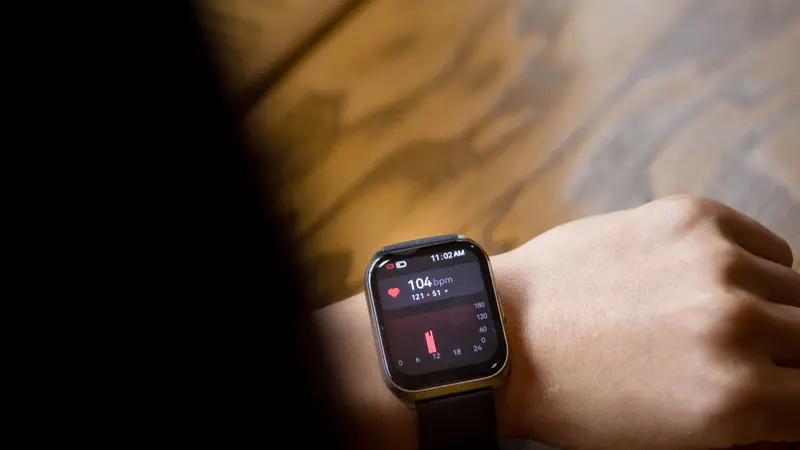
For most adults, a normal resting heart rate is between 60 and 100 beats per minute (bpm), according to the British Heart Foundation. Fit people often sit lower, sometimes below 60, and that can be perfectly healthy. Regular aerobic exercise is the most reliable way to bring your resting rate down over weeks and months.
The key insight: one reading tells you very little. Caffeine, a glass of wine, a bad night or a cold can push your resting heart rate up for a day or two. What matters is your own average over time, and how you feel.
Below: how to measure it, how far to trust your watch, what the research says about long-term health, and what lowers it.
What Is Resting Heart Rate?
Your resting heart rate is the number of times your heart beats in a minute when you have been sitting or lying still for a while. Heart rate and pulse rate usually mean the same thing: each beat pushes blood through your arteries, and you feel it as a pulse at your wrist or neck.
The British Heart Foundation (BHF) says a normal resting heart rate is usually between 60 and 100 bpm for adults, but that what is normal varies from person to person with age, health and sex. Women tend to have a slightly higher resting rate than men, because their hearts are usually a little smaller and pump less blood with each beat.
So learning your own baseline is more useful than comparing your number with a friend's.
Why Do Fit People Have a Lower Resting Heart Rate?
A trained heart pumps more blood with each beat, so it needs fewer beats a minute at rest.
The BHF says a resting rate below 60 bpm, called bradycardia, can be normal for people who are very fit and active, during sleep, or in people taking medicines such as beta blockers. A low number with fainting, dizziness or unusual tiredness, though, needs a GP.
How Do You Measure Your Resting Heart Rate Properly?
The BHF's guide to checking your pulse sets out a simple method:
- Sit or lie down for five minutes first, so recent activity does not affect the reading.
- Skip caffeine and cigarettes beforehand.
- Find your pulse. Hold one hand palm up with the elbow slightly bent. Place the pads of your first and middle fingers on the inside of that wrist, at the base of the thumb. Press lightly, a little harder if you cannot feel it. You can also use your neck, just below the jaw beside the windpipe, sitting or lying down.
- Count. Count the beats for 60 seconds, or count for 30 seconds and double it.
- Notice the rhythm. A normal pulse feels regular and steady. An occasional missed beat is usually nothing to worry about. If it feels irregular, count for a full 60 seconds.
The BHF also advises checking at the same time every day for an accurate picture. First thing in the morning, before coffee or getting moving, is easiest for most people. Note it daily and look at the weekly average, not any single morning.
How Accurate Is Your Smartwatch at Measuring Resting Heart Rate?
Most wrist wearables measure heart rate with light: LEDs shine into the skin and a sensor reads tiny changes in blood volume with each beat. This is called photoplethysmography (PPG).
At rest, the research is fairly reassuring. A 2020 study in npj Digital Medicine tested consumer and research-grade wearables across a range of activities and skin tones. It found no statistically significant difference in accuracy across skin tones, but it did find differences between devices and between activities: on average, absolute error during activity was 30% higher than during rest. The authors concluded that the wearables were all reasonably accurate at rest and during prolonged raised heart rate, but varied in how well they kept up with changes in activity.
A 2020 systematic review in JMIR mHealth and uHealth of 158 publications came to a similar view. Wearables measured heart rate accurately in laboratory settings, but accuracy varied by manufacturer and device type.
What this means for you:
- For resting trends, a snugly worn watch is usually good enough.
- A single number is not a diagnosis. The BHF notes that heart rate monitors can help you track your health but cannot diagnose a condition.
- If a reading worries you, check your pulse by hand, and speak to your GP if it stays outside your usual range.
Visionary does not make wearables and does not read heart rate. If you use a watch, you will see its numbers in that watch's own app.
What Makes Your Resting Heart Rate Go Up?
The BHF lists several everyday causes of a higher reading:
- Alcohol, which can temporarily raise your heart rate and make it feel like it is pounding or fluttering
- Infection or fever, including flu and Covid-19, as your heart works harder to help fight it
- Anxiety and stress
- High temperatures, such as a hot day or a hot bath
- Dehydration
- Some medicines, such as certain asthma inhalers
- Smoking
The NHS adds that lack of sleep, caffeine and strenuous exercise are common causes of heart palpitations, the feeling of a racing or thumping heartbeat.
Hard training can play a part too: your resting rate may sit a few beats higher for a day or so after a tough session. If it stays raised for several days and you feel flat, that is a sensible cue to ease off. Our guide on why rest and recovery matter explains how to build recovery into your week.
Does a Higher Resting Heart Rate Matter for Long-Term Health?
It is linked with it, but that is not the same as causing it.
The largest pooled analysis is a 2016 meta-analysis in the Canadian Medical Association Journal by Zhang and colleagues. It combined 46 prospective cohort studies covering more than 1.2 million people in the general population. Each 10 bpm higher resting heart rate was associated with a 9% higher relative risk of death from any cause and an 8% higher relative risk of death from cardiovascular disease.
Compared with the lowest resting heart rate group, people with a resting rate above 80 bpm had a 45% higher relative risk of death from any cause. The results held after adjusting for traditional heart disease risk factors.
Three important caveats:
- These are observational studies. They show that people with higher resting rates tended to have worse outcomes, not that the heart rate itself was the cause. A higher resting rate can reflect lower fitness, illness, stress or other factors.
- The authors found substantial differences between studies and signs of publication bias, which make the exact figures less certain.
- Relative risk is not your personal risk, which depends on your age, health and much else.
The useful message is simpler: a resting rate drifting up over months without an obvious cause is worth noticing, and the habits that lower it support heart health in general.
How Can You Lower Your Resting Heart Rate?
Expect change over weeks and months, not days.
Regular aerobic exercise
This has the strongest evidence. A 2018 systematic review and meta-analysis in the Journal of Clinical Medicine by Reimers and colleagues pooled 191 studies of exercise in healthy people. All types of exercise lowered resting heart rate, but only endurance training and yoga significantly reduced it in both women and men. People who started with a higher resting rate tended to see bigger drops, and older groups tended to see smaller ones.
The full text gives the size of the effect: across all the comparisons, resting heart rate fell by 3.3 bpm more in the exercise groups than in the control groups. That is a modest average, and individual results vary.
Steady, conversational cardio such as brisk walking, cycling or swimming is a good start. Our guide to Zone 2 training explains how to find the right easy effort, and the Cardiovascular Fitness Foundations course covers building endurance step by step. The NHS atrial fibrillation page suggests aiming for at least 150 minutes of moderate exercise a week.
Sleep
Lack of sleep is a known trigger for palpitations, and many people notice a higher reading after a broken night. Regular bed and wake times help most.
Alcohol
Alcohol can raise your heart rate for hours afterwards, often showing up as a higher reading the next morning. Our article on alcohol, sleep and fitness looks at how a few drinks affect your night and your next workout.
Stress and slow breathing
Slow, steady breathing, yoga (which lowered resting rate in both sexes in the Reimers review) and time to wind down can all help.
Weight, smoking and caffeine
The NHS lists keeping to a healthy weight, not smoking, drinking less alcohol and avoiding triggers such as caffeine among the things that help people with heart rhythm problems. They are sensible habits for everyone.
What Nudges Your Resting Heart Rate Up and Down?
| Factor | Usual effect | How long it lasts |
|---|---|---|
| Regular aerobic exercise | Down | Builds over weeks and months |
| Yoga | Down | Builds over weeks and months |
| Better, regular sleep | Down, or back to your usual | Days |
| Alcohol | Up | Usually that night and the next morning |
| Caffeine and smoking | Up | Hours |
| Stress and anxiety | Up | While it lasts |
| Illness or fever | Up | Until you recover |
| Dehydration or heat | Up | Hours to a day |
| A very hard training session | Up | Often a day or two |
| Beta blockers | Down | While you take them |
| Some asthma medicines | Up | Varies |
When Should You Worry About Your Resting Heart Rate?
The BHF says not every change in heart rate means something is wrong, but some patterns need checking.
See your GP if:
- Your resting heart rate is consistently above 100 bpm for no obvious reason, such as illness or a hot day
- Your resting heart rate is below 60 bpm and you feel faint, dizzy or very tired, or you have fainted
- Your pulse often feels irregular, especially if you are 65 or over, as the BHF says an irregular pulse could be a sign of atrial fibrillation (AF)
- You keep getting palpitations, they are happening more often, they last longer than a few minutes, or you have a heart condition or a family history of heart problems
- Your exercise tolerance has dropped and you get breathless more easily than before
- You notice a change in heart rate after starting a new medicine
The NHS lists the main symptoms of AF as an irregular pulse, a heartbeat that pounds, races or flutters, a rate faster than 100 bpm, tiredness, breathlessness and dizziness. Sometimes there are no symptoms, which is why knowing how to check your own pulse helps. A watch alert about an irregular rhythm is a prompt to see your GP, not a diagnosis.
Call 999 or go to A&E if:
- You have palpitations or a fast or irregular heartbeat with chest pain, shortness of breath, or fainting or feeling faint
- You have a fast or irregular heartbeat with weakness or numbness on one side of your face or body, confusion, difficulty speaking, or loss of sight, which can be signs of a stroke
The NHS advises that you do not drive yourself to A&E. If your symptoms have stopped, ask your GP surgery for an urgent appointment, or call 111.
How Visionary Can Help
Visionary does not read your heart rate and is not a medical device, but it can help with the habits that move your resting rate in the right direction. Training plans run across 8 levels, Foundation to Mastery, and adapt as you progress, so you can build regular activity without doing too much too soon. The sleep tracker can sync with Apple Health, so you can see whether your nights are getting more regular. Vic, the AI health assistant in the app, can answer everyday questions about training, recovery and sleep, and the Learn library includes Heart Rate Variability: Reading Your Body's Recovery Signal. If you track numbers from a watch, our guide to what your fitness data tells you about progress helps you read them sensibly.
Start your 7-day free trial and build the training and sleep habits that support a healthier resting heart rate.
FAQ
What is a good resting heart rate for my age?
The BHF says a normal resting heart rate for adults is usually between 60 and 100 bpm. Within that range, what is normal for you depends on your age, fitness, health, sex and medicines, so your own average over time is the most useful guide.
Is a resting heart rate of 50 bpm too low?
Not necessarily. The BHF says a resting rate under 60 bpm can be normal if you are very fit, asleep, or taking medicines like beta blockers. See your GP if a low rate comes with fainting, dizziness or unusual tiredness.
Why is my resting heart rate higher in the morning after drinking?
Alcohol can temporarily raise your heart rate and tends to disturb sleep, so a higher reading the morning after drinking is common. It usually settles within a day or so.
How long does it take to lower your resting heart rate?
Expect weeks to months of regular exercise rather than days. In the Reimers meta-analysis of 191 studies, exercise groups saw resting heart rate fall by 3.3 bpm more than control groups on average, with endurance training and yoga showing the clearest effects.
Are smartwatches accurate for resting heart rate?
Research suggests wrist wearables are reasonably accurate at rest and less accurate when activity changes quickly, with differences between devices. They are useful for trends but cannot diagnose a heart condition.
This article is for general information only and is not a substitute for personalised medical advice. Visionary does not measure heart rate and cannot diagnose heart conditions. If you have a heart condition, take medicines that affect your heart rate, or notice a resting heart rate that is persistently fast, slow or irregular, speak to your GP before changing your exercise routine. If you have chest pain, breathlessness or fainting with a fast or irregular heartbeat, call 999.
Related articles
 FitnessHabitsLongevity
Inside Visionary Learn: How Expert-Led Courses Turn Fitness Knowledge Into Lasting Habits
Visionary Learn uses expert-led courses and practical resources to help you understand fitness, build sustainable habits, and stay consistent.
25 Sept 2026 · Sophie Sparkes Weight LossRecoveryVisionary Platform
10 Best Wellness Platforms for Busy Professionals Who Want Training, Nutrition and Coaching in One Place
Discover how integrated wellness platforms combine personalised training, nutrition guidance, and learning to help busy professionals stay consistent.
24 Sept 2026 · Ashton de Pontes Mental HealthMetabolismMotivation
Why Am I Always Bloated? Common Causes and Solutions
Common causes of bloating include eating quickly, constipation, food intolerances, stress, and fibre changes. Learn what patterns may help ease persistent bloating.
21 Sept 2026 · Sophie Sparkes